Showing posts with label bad debt. Show all posts

Friday, July 12, 2013

10 Financial Infographics and a Blogger


Today, we are full of links!

Info graphics have become a big rage on the internet. They can be very useful in explaining fairly complex issues in a series of “Powerpoint” like graphics and text that can be found on one page. Wikipedia says they can improve our cognition by utilizing graphics to enhance the human visual system’s ability to see patterns and trends; a data visualization so to speak. I like them because the read fast and always leave an impression.

Here are ten infographics I found that have some very important information in them that everyone could use. I will comment a little on each…


Love and Finances. How much does love cost? It might be more than you think.

How much do Americans Save? There are a lot of demands on our wallet! As savers, how are we ranked against other countries’ savers?

Protect your Identity Online. These are simple tips anyone can use to protect them from scammers. You are only safe if you take action. No one will do it for you!

What are capital gains? If you are unsure or don’t know at all, this graphic is a terrific explanation. It is better to know now than learn too late. That could be a costly tax mistake!

How finances impact emotional well being. Do you get depressed at the end of the month when your account runs low? Do you ever get the “Day before Pay Day Blues?”

How much can you save with a Roth IRA? This is surprising! Had I started in my 20’s I would have a huge tower of beer or a huge retirement account if I invested in dollars rather than beer. This is a fun and informative graphic.

It is important for us to plan for a long retirement. If you and your spouse were 62 today, there is a 47% chance that one of you will live to age 90. Have you planned your retirement accordingly?

Do financial challenges cause divorce? Earlier, we saw the costs of love in our Love and Finance graphic. But can money also cause a divorce?

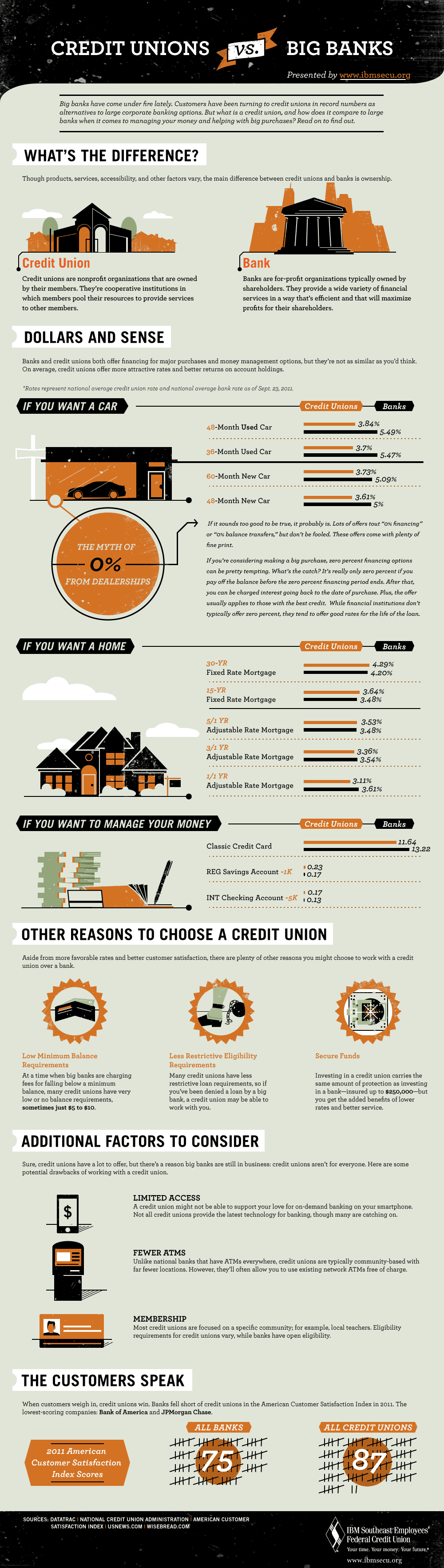
What is a credit union? This info graphic lays it out nicely for us.

Credit Unions vs. Big Banks. The battle between the heavyweight champ (big banks) and the flyweight contender (credit unions) goes on. Where would you rather keep your banking?


*          *          *

Len Penzo is an electrical engineer with a good head for personal family finance. He is a recommended blogger by Kiplinger Reports who named him one of “Kiplinger’s Personal Finance Best Money Blogs.” I like to read Len’s blog weekly.

What I like best about Len’s blog: “Well, my blog is all about being personally responsible – not only for our personal finances, but also for everything else we do in life.  As you will learn from my blog, the great thing about financial freedom is that anyone can attain it — regardless of income level!”
http://lenpenzo.com/ Len Penzo - Finance Blogger

*          *          *

Don’t forget that this weekend is the Summer’s Hottest Car Sale!!!

The parking lot at our main office will be filled with recent model pre-owned cars this weekend. We have some outstanding financing deals for those who qualify.

July 13 - Saturday from 9am – 6pm
July 14 - Sunday from 10am to 5pm

Meriwest Credit Union Main Office
5615 Chesbro Ave
San Jose CA 95123

Don't forget to "LIKE" us on Facebook: http://www.facebook.com/MeriwestCreditUnion

Federally insured by NCUA. We do business in accordance with the Federal Fair Housing Law and Equal Credit Opportunity Act.
Copyright 2013 Meriwest Credit Union. All rights reserved.

Friday, May 17, 2013

Over Your Head Financially? Here are your top ten indicators...


 1. Carrying a balance on a credit card. If you are not paying them off, you are paying interest. If you could shift all the interest you paid on your consumer credit cards to your retirement account, how rich would you be? 


2. You use payday loans to make ends meet at the end of the month. Bad consumer! 

3. You’ve been turned down for a consolidation loan. This is a sure sign you are already over-extended and that your debt-to-income ratio is too high. Time to budget your expenses and start paying down what you owe! 

4. You’re hiding your spending behavior from family members. This red flag indicates that you are aware of your personal finance problems, but are unable to acknowledge it. Fighting with your spouse is a related indicator as financial troubles often lead to domestic trouble.

5. You finance your vehicle for more than five years. This may be a clear sign that you’re buying more vehicle than you can reasonably afford.

6. You get more than one late notice per year. On occasion, everybody may let a bill fall through the cracks and forget to pay it. But if you find yourself getting multiple late notices for bills, especially for utilities, then that’s a signal that your finances may be in serious trouble.

7. You get more than one bounced check per year. Again, most folks have had an occasional overdraft of their checking account. But if this happens more than once per year, it’s usually a sign of trouble.

8. You need a co-signer to get a loan. Those without a credit history can ignore this warning sign. However, for everyone else, the need for a co-signer indicates that banks no longer find you credit worthy.

9. You find yourself borrowing from your family and friends. We have heard that borrowing from friends or family is a surefire way to sow the seeds of discontent — especially when you fail to pay the money back.

10. You lack an emergency savings account of at least three months living expenses. Those who are living from paycheck to paycheck can be completely derailed by even the most modest unexpected expenses, such as the need for major car repairs.

Credit: Credit Unions are providing their members and the public with more financial education classes than ever. This is done for free as a community service to their neighbors. Yeah! 

Debit: Over the past year, several national banks have raised fees on their checking overdraft and non sufficient funds transactions. Boo! 

Our Next Financial Workshop:
May 22nd - Preventing Identity Theft -6:30pm
Meriwest Credit Union Main Office at 5615 Chesbro Ave, San Jose CA 95123
RSVP with Greg Meyer at gmeyer@meriwest.com or call at 408-365-6328

The Long Shadow of Bad Credit in a Job Search: How does your credit effect your ability to find a job? This story, from New York Times Business Day section, will give you some insights into how hiring managers view your credit report. Click the link and learn! 


Len Penzo - One of the great financial bloggers! Check out his blog here: LenPenzo.com

Monday, November 19, 2012

Your FICO Score-Mystery no More!


Is your FICO score a mystery to you? Don’t feel bad, most American consumers don’t know their FICO score much less how it is determined. Generally, your FICO score can vary from 300 at the lowest to a high of 900. People ask me, “Hey, Credit Union Guy, what’s a good credit score?” Today, a good score would be in the neighborhood of 740. At this level you can access good rates on car loans, home financing, and credit cards. Go below 740 and you may find yourself paying higher rates of interest on your loans and credit cards.

“What is a FICO?” FICO is an acronym for the Fair Isaac Company; the company that invented the calculations that result in a measurement of credit risk. The score is determined by an algorithm. In a sense, it is a highly complex algebra problem that takes into account your payment history, the ratio of your loan and card balances vs. your available balances, the length of your credit history, your credit request inquiries and the types of credit you are managing. The formula for exactly how the score is calculated is proprietary information and owned by Fair Isaac.

“Why does the FICO score exist?” In the old days of lending, loan managers looked at the physical credit report for a person and made a judgment call on the risk involved with making a loan to that person. Back then, two loan underwriters might look at the same report and have very different opinions on the applicant’s payment history. Credit Scoring took the judgment call out of the process. A person either scored well or they didn’t. Another reason for FICO score is volume. As our population grew and more people started using banks and credit unions, the loan volume increased significantly. In order to speed the loan process, the FICO score was used. Loan processors can input a minimum of data and get a score for a credit decision rather than reviewing the entire credit report.
Here is an approximate breakdown of how it is determined:
·   35 percent of the score is based on your payment history. This makes sense since one of the primary reasons a lender wants to see the score is to find out if (and how timely) you pay your bills. The score is affected by how many bills have been paid late, how many were sent out for collection, any bankruptcies, etc. When these things happened also comes into play. The more recent, the worse it will be for your overall score.

·   30 percent of the score is based on outstanding debt. How much do you owe on car or home loans? How many credit cards do you have that are at their credit limits? The more cards you have that have maxed out lines, the lower your score will be. The rule of thumb is to keep your card balances at 30% or less of their limits.

·   15 percent of the score is based on the length of time you've had credit. The longer you've had established credit, the better it is for your overall credit score. Why? Because more information about your past payment history gives a more accurate prediction of your future actions.

·   10 percent of the score is based on the number of inquiries on your report. If you've applied for a lot of credit cards or loans, you will have a lot of inquiries on your credit report. These are bad for your score because they indicate that you may be in some kind of financial trouble or may be taking on a lot of debt (even if you haven't used the cards or gotten the loans). The more recent these inquiries are the worse for your credit score. FICO scores only count inquiries from the past year.

·   10 percent of the score is based on the types of credit you have. The number of loans and available credit from credit cards you have makes a difference; installment loans vs. revolving lines of credit. There is no magic number or combination of types of accounts that you shouldn't have. These actually come more into play if there isn't as much other information on your credit report on which to base the credit decision.


Questions? Ask the Meriwest Credit Union Guy at gmeyer@meriwest.com.

*   *   *

The next Meriwest Credit Union Financial Education Workshop will be our Reality Based Budgets Workshop for teens and college students on Wednesday, Nov. 28th at our Monta Loma Financial Center in Mountain View. This workshop takes through a post college money management simulation where they are given a salary, rent, car payments, and other bills and build their living budget. 

Our Monta Loma Financial Center is located at the corner of Rengstorff and Middlefield  Road in the Monta Loma Shopping Center. The program begins at 6pm. We hope you can join us. Please RSVP at our Events Link.


Thursday, October 4, 2012

Does Good Debt Exist?


Good debt does still exist. Home debt, if you are not dramatically underwater is still good debt. Please remember that the majority of home owners have seen some degradation of their equity, but most homeowners are not underwater. The generally accepted number is somewhere between 20-25% of all homeowners have a home that is underwater. Most of these were either purchased or refinanced during the recent boom in prices, especially 2005 to 2008. It is a simple truth that 75% or more of all U.S. homeowners are not underwater. Homes purchased today with a reasonable downpayment of 20% or more may have some stagnant price growth in the near term, but historically, owning a home is a sure path to wealth creation. When you consider the tax advantages of owning a home and the increase in value even if it only follows regular inflation rates, new homeowners will incur good debt.

Is college debt good debt? Many are of the opinion that education is important and the resulting debt from financing it is still a good debt. That is provided the student finishes and graduates. Statistics show that lifetime earnings of those with bachelors and masters degrees are substantially higher than those with only a high school education. I have many former college students in my workshops who have not graduated and have substantial student loan debts. Those debts become good debt and will be well worth it when they finish their degrees.

Is all credit card debt bad debt? Not necessarily. Often, young persons will use a credit card like it is going out of style. They will pay for movies, dinners out, concerts, and other fun items with their credit cards. That is some bad debt; debt where you have little or nothing but memories to show for it. I think the responsible use of credit cards is in purchasing assets for your home or car. Use the card for furniture, needed appliances or a major car repair. That way, when you are on your couch writing a check for your Visa card payment, you are sitting on your asset. (A little finance humor.)

Vehicle debt can often be termed good debt. Your car is an economic development vehicle. It gets you to work on time and gets your kids to school. Is spending 2 hours plus on a bus or train daily the best use of your personal time? It is a matter of opportunity cost. How much is your personal time worth?

In the end, I think that the difference between good debt and bad debt is subjective. Our income, education, and cultural background all play a role in how we view the value, really the personal value, of our debt. 

*   *   *

Our next financial workshop:

Today's Real Estate Market and Tips for Purchasing Foreclosed Property
Saturday, October 13, 2012 - 10:30 a.m.
Chesbro Financial Center, San Jose, CA