Showing posts with label credit check for employment. Show all posts

Friday, November 15, 2013

College Students Using a Credit Card


The best way to use a credit card is only for emergencies. A blown transmission is a good example. Not everyone has $2,000 to fix it when it goes. But that transmission is an integral part of your car and your car is an integral part of your economic development; i.e. it gets you to class and to work on time. So fixing that transmission quickly and being able to pay it off over time may be very important for many students.

This brings me to my second point beyond emergencies, use your card to only purchase assets; not liabilities. The transmission is an asset to your car. Liabilities? Vacations are a liability. When you pay for a vacation on a card, you are only deferring the costs. After the vacation, you only have memories. Pizzas, movies, concerts, fancy dinners, fashionable splashy clothes and such are drags on our monthly budgets if we decide to place them on our card. These things have virtually no value after we pay for them and have the experience of the movie etc. You want to go to a concert or a movie? Save your money for it. Make it a special part of your budget. Paying for it with saved money is much more satisfying.

Use the card to purchase assets. Your school books are an asset to your education. If you use your card to buy household items, use it for furniture like a couch. Then you are buying an asset for your house. Then, when you sit on that couch and write out your checks for your bills, you are sitting on your asset. J (A little banker humor.) But, think about it, if you suddenly fall on hard times, you can sell that couch and pay down your card. You can’t sell the memory of a concert or the taste of a meal from three months ago.

Also, whenever one uses their credit card, consider how you will pay it off before you charge it!

Here are some other ideas fresh from my blog:

  1. When establishing your first credit, consider using a secured credit card; a card where you have to make a deposit in a savings account in order to establish and maintain the card. The money on deposit is your collateral for the credit. You now have an additional incentive besides maintaining our credit to be on time with your payments; your own money is at stake. Meriwest Credit Union offers this type of Secured Visa Card. Info on our Secured Visa Card is here.

  1. Another secured type of credit option is the credit union share account loan. Most credit unions have this. You make a deposit to an account and then take a loan out against the funds in the account. As you pay it back on time, your CU lets the credit bureau know and it helps get you get established in managing credit. Secured Share Account Loan info is available here.

  1. When you get your first credit card, do not celebrate. There are those who like to go out and get a quick pizza or a movie when their new credit card arrives. A new credit card is not a good excuse to go out to spend and celebrate.

  1. Avoid gas cards issued by Shell, Chevron, and other oil companies. Those who are new to credit are often unaware that gas purchases on oil company cards have to be repaid monthly. Only repairs and major purchases, (tires, transmissions, etc.) can be paid over time.

  1. Check your credit report annually at AnnualCreditReport.com to verify your current outstanding credit and prevent identity theft. Do you see a card on your report you didn’t order or apply for? If you are reviewing your report annually, you can take action fast and stop identity theft.

  1. It seems simplistic, have a budget and plan your spending. A good budget can keep you from using your credit cards to supplement your monthly budget and help you pay off the debt you already have. 

*   *   *
Our next Free Financial Education Workshop will take place Dec. 11th at our Main Office. 

Credit Myths and Repair
6:30pm to 7:30pm
5615 Chesbro Ave
San Jose CA 95123

Please RSVP with Greg Meyer at gmeyer@meriwest.com or 408-365-6328

Friday, July 12, 2013

10 Financial Infographics and a Blogger


Today, we are full of links!

Info graphics have become a big rage on the internet. They can be very useful in explaining fairly complex issues in a series of “Powerpoint” like graphics and text that can be found on one page. Wikipedia says they can improve our cognition by utilizing graphics to enhance the human visual system’s ability to see patterns and trends; a data visualization so to speak. I like them because the read fast and always leave an impression.

Here are ten infographics I found that have some very important information in them that everyone could use. I will comment a little on each…


Love and Finances. How much does love cost? It might be more than you think.

How much do Americans Save? There are a lot of demands on our wallet! As savers, how are we ranked against other countries’ savers?

Protect your Identity Online. These are simple tips anyone can use to protect them from scammers. You are only safe if you take action. No one will do it for you!

What are capital gains? If you are unsure or don’t know at all, this graphic is a terrific explanation. It is better to know now than learn too late. That could be a costly tax mistake!

How finances impact emotional well being. Do you get depressed at the end of the month when your account runs low? Do you ever get the “Day before Pay Day Blues?”

How much can you save with a Roth IRA? This is surprising! Had I started in my 20’s I would have a huge tower of beer or a huge retirement account if I invested in dollars rather than beer. This is a fun and informative graphic.

It is important for us to plan for a long retirement. If you and your spouse were 62 today, there is a 47% chance that one of you will live to age 90. Have you planned your retirement accordingly?

Do financial challenges cause divorce? Earlier, we saw the costs of love in our Love and Finance graphic. But can money also cause a divorce?

What is a credit union? This info graphic lays it out nicely for us.

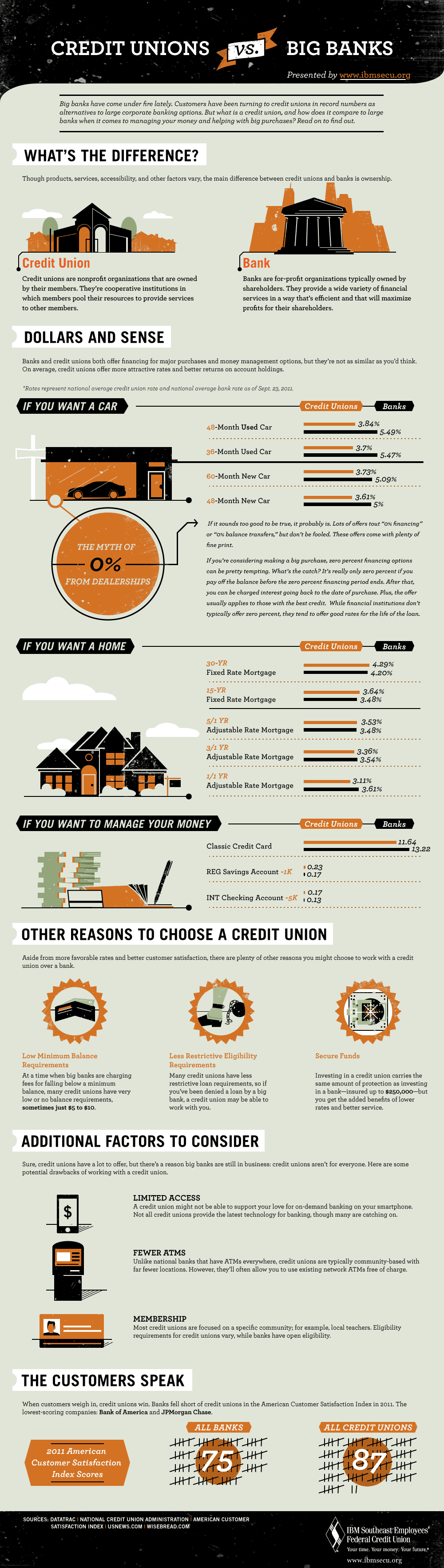
Credit Unions vs. Big Banks. The battle between the heavyweight champ (big banks) and the flyweight contender (credit unions) goes on. Where would you rather keep your banking?


*          *          *

Len Penzo is an electrical engineer with a good head for personal family finance. He is a recommended blogger by Kiplinger Reports who named him one of “Kiplinger’s Personal Finance Best Money Blogs.” I like to read Len’s blog weekly.

What I like best about Len’s blog: “Well, my blog is all about being personally responsible – not only for our personal finances, but also for everything else we do in life.  As you will learn from my blog, the great thing about financial freedom is that anyone can attain it — regardless of income level!”
http://lenpenzo.com/ Len Penzo - Finance Blogger

*          *          *

Don’t forget that this weekend is the Summer’s Hottest Car Sale!!!

The parking lot at our main office will be filled with recent model pre-owned cars this weekend. We have some outstanding financing deals for those who qualify.

July 13 - Saturday from 9am – 6pm
July 14 - Sunday from 10am to 5pm

Meriwest Credit Union Main Office
5615 Chesbro Ave
San Jose CA 95123

Don't forget to "LIKE" us on Facebook: http://www.facebook.com/MeriwestCreditUnion

Federally insured by NCUA. We do business in accordance with the Federal Fair Housing Law and Equal Credit Opportunity Act.
Copyright 2013 Meriwest Credit Union. All rights reserved.

Friday, November 30, 2012

Alternative Credit Scores


Over 70 million adults in the U.S. do not have a credit score or have a very limited credit history. Individuals and families living with limited credit files are forced to take advantage of alternative financial sources to cash their checks or get temporary short term loans aka Pay Day Loans. Users of alternative financial sources generally pay very high costs in relation to the usual transactions you might perform at your credit union. Cashing a paycheck could cost $3 - $15. A two week $200 payday loan could cost as much as $45 if paid on time. If the loan cannot be paid off right away, it has to be renewed. In California, that means the loan principle and interest has to be paid and a new loan created. How many times will a person have to pay $45 to maintain and renew the loan until they can afford to pay it off completely?

Several companies have created alternative credit scoring products based on the analysis of non-traditional data, including rental and bill payment history, insurance payments, debit-card use and public records. They are trying to use this data to predict the payment history of people who don’t have access to traditional credit products that can be tracked through a FICO score.

That is basically what a credit reporting bureau does for people with their credit. It reports the usage of the various forms of credit a person has and tracks the payments made and balances carried. Through a computer algorithm it creates a number that can predict, with fair certainty, the future payment history of an applicant. Those with FICO scores over 740 are more likely to make their payments on time and manage their outstanding balances better than someone with a score of less than 740.

Why do some people want to use alternative credit data? There is a profit motive as vendors can sell more products and services if there is a universe of more qualified buyers. It could also help families struggling with traditional credit by showing their propensity to pay their rent, utility bills, auto insurance, and other regular payments. By using alternative data, lenders stand to reach a large group of potential borrowers about whom they currently have little or no information. For these consumers, alternative credit scores strengthen lenders’ ability to:
-         Reliably rank order risk;
-         Efficiently evaluate applicants for credit or design offers for credit;
-         Increase approval rates while controlling for acceptable levels of risk

Meriwest works exclusively with Experian Credit Bureau. Experian offers various forms of credit reports. We use three specifically:

-         For all auto lending, direct lending to our members and through the Credit Union Direct Lending (CUDL) Network we use the FICO Auto 2 score. This is provided by Experian, and is a variation of the basic FICO score – more heavily weighted to the existence and performance on previous auto loans compared to the traditional FICO score.  This is similar to the “Auto Industry Option Scores” listed below.
-         For our other consumer loans, we use a custom score from Experian called a “Fast Start” score.  It is based on credit and personal characteristics such as their time on the job, how long they have been a member, and other data.
-         We also look at the Experian BK (Bankruptcy) score.  This is a predictor of the applicants likelihood of filing (or needing to file) bankruptcy, and is used as a risk measurement in our analysis.


We don’t use alternative scores, but do tend to look at our borrowers differently than a traditional bank. In a traditional commercial bank, credit score lending is King. If they are looking for a FICO score of 740 or above and that’s where you score, your application has a preliminary approval pending review of debt and income. If your FICO Score comes in less than 740, your application will be declined due to credit. They will take no further action on your behalf outside of sending you the decline letter.

Credit unions, in general, take a more holistic view of their borrowers. Sure, the FICO score is an important part of the loan qualification. Credit Unions would like to see a 740 FICO Score just like the big banks. But if you miss the score by this much (thumb and forefinger showing an inch), you may still qualify for a loan at a credit union. Why? They look at the whole person, not just their credit score. They look at how long you have been employed in the same business or the same employer. How long have you lived in the area? Or at the same home? How long have you been a member of the Credit Union? Have you borrowed from them before? All of these questions go into making the credit decisions. I am not saying that everyone with a less than 740 FICO Score gets a loan. But, if someone misses the target score by ten or twenty points, it is not the end of the loan. Credit Unions can take these questions into consideration and possibly make the loan for them at a slightly higher rate. This is called, Risk Based Pricing. If there is increased risk in lending to someone, say a 720 vs. a 740 FICO Score, we can price our interest rate a little higher accordingly to offset the risk.

Here is a run down of the more common credit scores and alternatives to credit scores:

FICO Score: Created by the Fair Isaac Corporation, FICO is the best-known credit scoring system in the United States. It is a way of measuring an individual's creditworthiness. A FICO score is a quantification of a variety of factors in an individual's background, including a history of default, the current amount of debt, and the length of time that the individual has made purchases on credit. A FICO score ranges between 300 and 850. The higher the score, the more likely that individual will pay their bills in a timely manner.

Vantage Score: A consumer credit rating product developed by three credit rating agencies - Equifax, TransUnion and Experian - as an alternative to the FICO Score. VantageScore uses a different rating scale (501 to 990) than FICO (300 to 850), and is branded as a score that provides lending institutions and banks information related to sub-prime financing. The score is calculated through a weighted average of a consumer's available credit, recent credit, payment history, credit utilization, depth of credit and credit balances.

Auto Industry Option Scores: Auto lenders are unlike other kinds of creditors. Many other creditors look at the entire credit picture to make a decision. However, some auto lenders base their decision solely on how previous auto loans were managed. So, even if your credit scores are bad, if you never missed a car or truck payment or sent one in late, your Auto Industry scores will most likely be higher than the standard FICO scores.

Veritas (by Digital Risk): Most recent alternative; used for home mortgage credit analysis. It Integrates borrower credit characteristics with property and local real estate market data along with proprietary behavioral prediction models. 

*   *   *

Our next Credit Myths workshop is this Wednesday the 5th of December
Credit Myths and Repair
6:30pm    Wednesday    December 5th 
Meriwest Credit Union Main Office
5615 Chesbro Ave, San Jose CA 95123
Click here to RSVP!


Monday, November 19, 2012

Your FICO Score-Mystery no More!


Is your FICO score a mystery to you? Don’t feel bad, most American consumers don’t know their FICO score much less how it is determined. Generally, your FICO score can vary from 300 at the lowest to a high of 900. People ask me, “Hey, Credit Union Guy, what’s a good credit score?” Today, a good score would be in the neighborhood of 740. At this level you can access good rates on car loans, home financing, and credit cards. Go below 740 and you may find yourself paying higher rates of interest on your loans and credit cards.

“What is a FICO?” FICO is an acronym for the Fair Isaac Company; the company that invented the calculations that result in a measurement of credit risk. The score is determined by an algorithm. In a sense, it is a highly complex algebra problem that takes into account your payment history, the ratio of your loan and card balances vs. your available balances, the length of your credit history, your credit request inquiries and the types of credit you are managing. The formula for exactly how the score is calculated is proprietary information and owned by Fair Isaac.

“Why does the FICO score exist?” In the old days of lending, loan managers looked at the physical credit report for a person and made a judgment call on the risk involved with making a loan to that person. Back then, two loan underwriters might look at the same report and have very different opinions on the applicant’s payment history. Credit Scoring took the judgment call out of the process. A person either scored well or they didn’t. Another reason for FICO score is volume. As our population grew and more people started using banks and credit unions, the loan volume increased significantly. In order to speed the loan process, the FICO score was used. Loan processors can input a minimum of data and get a score for a credit decision rather than reviewing the entire credit report.
Here is an approximate breakdown of how it is determined:
·   35 percent of the score is based on your payment history. This makes sense since one of the primary reasons a lender wants to see the score is to find out if (and how timely) you pay your bills. The score is affected by how many bills have been paid late, how many were sent out for collection, any bankruptcies, etc. When these things happened also comes into play. The more recent, the worse it will be for your overall score.

·   30 percent of the score is based on outstanding debt. How much do you owe on car or home loans? How many credit cards do you have that are at their credit limits? The more cards you have that have maxed out lines, the lower your score will be. The rule of thumb is to keep your card balances at 30% or less of their limits.

·   15 percent of the score is based on the length of time you've had credit. The longer you've had established credit, the better it is for your overall credit score. Why? Because more information about your past payment history gives a more accurate prediction of your future actions.

·   10 percent of the score is based on the number of inquiries on your report. If you've applied for a lot of credit cards or loans, you will have a lot of inquiries on your credit report. These are bad for your score because they indicate that you may be in some kind of financial trouble or may be taking on a lot of debt (even if you haven't used the cards or gotten the loans). The more recent these inquiries are the worse for your credit score. FICO scores only count inquiries from the past year.

·   10 percent of the score is based on the types of credit you have. The number of loans and available credit from credit cards you have makes a difference; installment loans vs. revolving lines of credit. There is no magic number or combination of types of accounts that you shouldn't have. These actually come more into play if there isn't as much other information on your credit report on which to base the credit decision.


Questions? Ask the Meriwest Credit Union Guy at gmeyer@meriwest.com.

*   *   *

The next Meriwest Credit Union Financial Education Workshop will be our Reality Based Budgets Workshop for teens and college students on Wednesday, Nov. 28th at our Monta Loma Financial Center in Mountain View. This workshop takes through a post college money management simulation where they are given a salary, rent, car payments, and other bills and build their living budget. 

Our Monta Loma Financial Center is located at the corner of Rengstorff and Middlefield  Road in the Monta Loma Shopping Center. The program begins at 6pm. We hope you can join us. Please RSVP at our Events Link.


Friday, August 24, 2012

The Costs of Bad Credit – Part One


I have always thought having and using credit was expensive. The whole idea of paying money to use money irks me. In our society, borrowing money is a necessary evil in order to build a good financial history. So, after high school or college, we enter the financial world and start using credit. Some of us used credit to enhance our lifestyles with purchases of stereos and TV’s; others purchased cars or even homes. Of course, we were all aware there is a cost to using credit. We pay a fee known as interest to borrow or, in a sense, rent the money we don’t have.

But for some of us, there were some hard lessons learned about the costs of using credit. When a payment is late, there is an additional late fee added on to your costs. A typical credit card late fee can be as high as $35. The late fee on a mortgage can average 5% of your monthly payment. A $3,000 monthly mortgage payment would have a late fee of $150! Late loan payment fees apply to RV loans, motorcycle loans, ATV loans, and other types of consumer loans.

Credit card companies will not only charge you a late fee, they will also charge the cardholder penalty interest. Your credit card’s interest rate may be a nominal 14.5%. But a late fee will cause that rate to more than double to 29.99%! Now any money you borrow through your card will cost you twice as much in interest as it did prior to your late payment. What’s the difference? One thousand dollars held for one year at 14.5% interest will cost a borrower $145. The same amount of money held for one year at the penalty interest rate of 29.99% results in a cost of $299! Is it like that forever? No. If you make six months of on time card payments after being charged with a late payment, you can get your credit card’s interest rate back to the original rate.  

Another one of the costs of credit are the fees paid by someone who allows a debt to go into collection. A debt or bill becomes a collection when the debt is reaching its first date of delinquency; usually the 90th day of nonpayment. At that point, the firm holding the debt can try to collect it themselves through their lending department or internal collection department or they may sell the debt to a collection agency. That collection agency buys it at a discount of 10%, 20%, or more from the original holder. The agency will also place their own “collection” fees on the debt. This may increase the debt by another 10% or so. When you consider late payment fees and collection fees, it makes paying on time look so attractive!

Late fees, penalty interest rates, and collection fees are only part of the cost of bad credit. Making credit mistakes also means there is a hit on your FICO score, reducing it. When one’s credit score gets low, the cost to do business via credit increases.

Part 2 of "The Costs of Bad Credit” will feature the expense of high cost credit products intended for families with compromised credit scores who cannot access regular affordable credit products. Check this blog next week for the scary conclusion to, “The Costs of Bad Credit.”

*  *  *

And don't forget our Meriwest Facebook page.  We love to get new fans and have them check in when they visit our branches. It is also a great way to keep up with new products and services and what your credit union is doing in the community.

Our next "Credit Myths and Repair Workshop" will take place at our Milpitas Financial Center on Aug. 29th at 6PM. Credit Myths goes over the Top Ten Myths of credit and how to access your credit report for FREE.  I hope you can join us!

Have a great week!


Friday, August 3, 2012

Living at Home Again: Financial Advice for recent Boomerang Kids


Recently I had an email from Bill H. who is a recent college graduate but was unable to find a job immediately in the current job market. He turned up on his parents’ doorstep like many other recent grads. This is often referred to as the Boomerang Effect: students returning home after college rather than striking out on their own right away. Often, this is not by choice; the student would rather be working and on their own.

He wrote:

Dear Credit Union Guy,

After graduating I had to move back home until I find a job. Do you have any tips for managing my finances at this stage in my life?

Bill H.

Dear Bill,

Here are some points for you and other Boomerang Kids:
  • Don’t take on any new debt while unemployed! Save your money to make the payments you need to make on any current student loan, car loan debt or credit cards.
  • Don’t ever use a credit card for entertainment purposes while unemployed. I have seen far too many pizzas, movies, and concerts on students’ credit cards. They have nothing to show for this debt that they are paying it off at 19%! Ouch!
  • Make all your payments on time. Late pays will show up on your credit report and many employers use a credit report to determine the personal responsibility of potential new employees. Current payments mean you will get out of the house soon. 30 and 60 day late payments may cause you to sleep in the bunk bed with your little brother for a while longer than planned.
  • Maintain your checking account, make regular deposits to cover your outstanding checks and debit card charges. If your account goes into a negative balance, get it positive quickly. Most financial institutions will only maintain a negative checking account for 30 days. Then they close it for cause and report any losses to a collection agency and ChexSystems, a credit reporting service for financial institutions. If you get reported to ChexSystems by your bank or CU, a ChexSystems record will prevent you from opening a new checking account at a member institution for the next five years! Most banks and credit unions are members of ChexSystems. Trust me, you don’t want your parents seeing mail for you from ChexSystems and collection agencies. That does not make for pleasant dinner conversation.
  •  Make sure you have the address of your student loan company and the payment due data for your loan. Generally, six months after you graduate you have to start paying your loan. If you are not employed, you can ask your student loan company for a deferral in payment; this is known as forbearance. Interest will still accrue on the loan and be added to the balance, but payments will be deferred for six more months.

Bill, you are not the first kid to come home after college and you won’t be the last. Returning to home after college can be a stressful situation for students and their families. It is not what you expected to do when you finished your college degree and it is not what your parents expected either. But you can make the best of a difficult situation.

Don’t let your finances become a regular topic of conversation at your family’s dinner table. While living at home and looking for your dream job, don’t overlook getting a part time job to make some ends meet. A little bit of income is better than no income at all and it helps pay your bills. Manage your debt well and keep on top of your checking account. In the end, you will be respected for handling your personal finances in a very mature manner.

Best of luck,
The Credit Union Guy

And for all of you out there looking for our next financial education workshops, your summer wait is over. Our next workshop will be "Reality Based Budgets for Teens" at our Milpitas Financial Center at 6PM on Aug. 22nd. 

Our next "Credit Myths and Repair Workshop" will take place at our Milpitas Financial Center on Aug. 29th at 6PM. 

I hope I will meet you at one of our seminars! Have a great week!

Thursday, June 21, 2012

Credit Reports and Employment Background Checks


For jobs that require a high degree of trust and responsibility, a background check is required. Part of that check includes a review of your credit report.

In the business of finance, credit reports are critical to the hiring process. You would not want someone handling your money if they could not manage their own! The credit report can tell us a lot about our potential employee. It gives us insight into how responsible they are with their money and credit. The thinking is, if someone is responsible with their own money, they will be accountable and reliable when given responsibility for your money.

But, right now, it can be difficult to find someone who has been unemployed for a while with perfect credit. We are seeing people with a number of credit issues applying for jobs. The bottomline is: Honesty is the best policy. My HR team appreciates when an applicant is upfront about their credit status and speaks to us about the deficiencies in their report. In example, “I have been out of work for six months and had to make several concessions to my budget to make ends meet for my family. I have one Visa account that is 30 days in arrears and I am two months behind on my mortgage. I should be able to bring these items current within two months of being hired.”  In these recessionary times, we need to be flexible and do our best to see the entire employee and not focus on one or two aspects of their past credit behavior. If someone were to be upfront with us regarding their past credit, we would appreciate their honesty. It is best to know ahead of time and not be surprised than the other way around.

Credit checks or inquiries for employment do not show up on credit reports requested by employers or creditors. Where you apply for work is none of their business. Those inquiries only appear on your copy report if you request it from a credit bureau or if you order it through WWW.AnnualCreditReport.com.

A person has the right to add a 100 word statement to their credit report at anytime should they feel the need. In the case of someone being unemployed or underemployed for a length of time, one could place a message on their credit report with all three credit bureaus that they were unemployed from xDate to xDate and had to allow some bills fall into arrears.  The message will stay on the report for 7 years. This message also plays for someone who was disabled and unable to work for a time. These messages will not help you access further credit, but may be helpful in accessing employment or rental housing. 

* * *

Are you looking for a new car this summer? Tired of feeling you paid too much for your car? You can make a change by contacting Bill Fultz, our Personal Auto Shopping Service Manager.  Bill is an Auto Broker who works for our members for FREE! Bill can get you the best deal on new and used cars; often at invoice or below. Learn more about our Personal Auto Shopping Service on our PASS Page.