Showing posts with label credit card consolidation. Show all posts

Friday, November 15, 2013

College Students Using a Credit Card


The best way to use a credit card is only for emergencies. A blown transmission is a good example. Not everyone has $2,000 to fix it when it goes. But that transmission is an integral part of your car and your car is an integral part of your economic development; i.e. it gets you to class and to work on time. So fixing that transmission quickly and being able to pay it off over time may be very important for many students.

This brings me to my second point beyond emergencies, use your card to only purchase assets; not liabilities. The transmission is an asset to your car. Liabilities? Vacations are a liability. When you pay for a vacation on a card, you are only deferring the costs. After the vacation, you only have memories. Pizzas, movies, concerts, fancy dinners, fashionable splashy clothes and such are drags on our monthly budgets if we decide to place them on our card. These things have virtually no value after we pay for them and have the experience of the movie etc. You want to go to a concert or a movie? Save your money for it. Make it a special part of your budget. Paying for it with saved money is much more satisfying.

Use the card to purchase assets. Your school books are an asset to your education. If you use your card to buy household items, use it for furniture like a couch. Then you are buying an asset for your house. Then, when you sit on that couch and write out your checks for your bills, you are sitting on your asset. J (A little banker humor.) But, think about it, if you suddenly fall on hard times, you can sell that couch and pay down your card. You can’t sell the memory of a concert or the taste of a meal from three months ago.

Also, whenever one uses their credit card, consider how you will pay it off before you charge it!

Here are some other ideas fresh from my blog:

  1. When establishing your first credit, consider using a secured credit card; a card where you have to make a deposit in a savings account in order to establish and maintain the card. The money on deposit is your collateral for the credit. You now have an additional incentive besides maintaining our credit to be on time with your payments; your own money is at stake. Meriwest Credit Union offers this type of Secured Visa Card. Info on our Secured Visa Card is here.

  1. Another secured type of credit option is the credit union share account loan. Most credit unions have this. You make a deposit to an account and then take a loan out against the funds in the account. As you pay it back on time, your CU lets the credit bureau know and it helps get you get established in managing credit. Secured Share Account Loan info is available here.

  1. When you get your first credit card, do not celebrate. There are those who like to go out and get a quick pizza or a movie when their new credit card arrives. A new credit card is not a good excuse to go out to spend and celebrate.

  1. Avoid gas cards issued by Shell, Chevron, and other oil companies. Those who are new to credit are often unaware that gas purchases on oil company cards have to be repaid monthly. Only repairs and major purchases, (tires, transmissions, etc.) can be paid over time.

  1. Check your credit report annually at AnnualCreditReport.com to verify your current outstanding credit and prevent identity theft. Do you see a card on your report you didn’t order or apply for? If you are reviewing your report annually, you can take action fast and stop identity theft.

  1. It seems simplistic, have a budget and plan your spending. A good budget can keep you from using your credit cards to supplement your monthly budget and help you pay off the debt you already have. 

*   *   *
Our next Free Financial Education Workshop will take place Dec. 11th at our Main Office. 

Credit Myths and Repair
6:30pm to 7:30pm
5615 Chesbro Ave
San Jose CA 95123

Please RSVP with Greg Meyer at gmeyer@meriwest.com or 408-365-6328

Friday, October 18, 2013

Should I close a Credit Card? Will that hurt my credit score?


A question I hear often is, “Should I close out old credit cards that I don’t use anymore?” Is that a good idea? First we will talk about why closing a credit card may not ever be a good idea and then we can look at some reasons to close out a credit card.

Closing credit cards should never be taken lightly. Closing a card removes that available balance from our overall available credit. Removing these available balances by closing the cards can reduce our FICO/Credit score. 30% of your score is based upon the ratio of used vs. available credit. Reduce the ratio and reduce your FICO score.

Example: A person has $20,000 in available lines of credit and has $5,000 charged up. They are using 25% of their available credit; a 1:4 ratio of used credit to available credit. Then they close a credit card with a $5,000 available balance. This decrease in their available credit, from $20k to $15k, increases the percentage of credit they are using to 33% and takes them to a lower and less desirable 1:3 ratio in credit usage. This will lower their FICO Score.

Closing cards can be a big deal if consumer credit cards are your only form of credit. If you have other types of credit, a mortgage or car loan for example and have other credit cards, closing one card may not be a big deal. But if one has a thin or minimal credit file, it could be detrimental.Also, the history of your card usage will drop from the report after 18 months and it will no longer be a factor in your FICO score. Ouch!

Why close a card? Fees. Some cards have instituted annual fees; one must pay an annual fee just to possess the card. These annual fees can range from $25 to $100 depending on the card and its features (rewards, vacation insurance, travel services, etc.). If the fee is too much for you to afford or you just won’t pay it on principle, then it might be time to look for a new card to replace this one or close it altogether.

Interest rates can be an issue for people who carry balances. An increase in the APR of 3%, say from 15% to 18%, can cost a cardholder an extra $150 over a year on a $5,000 credit card balance. If the APR is a concern, I would recommend finding a lower rate replacement. Credit card issuers will often offer reduced rates for balance transfers. This may be an opportunity to transfer the balance to a new card with a lower rate and close the old card.

The card has been stolen or compromised by an identity thief. Good reason to close it. Often your card issuer will offer to replace the card with an entirely new account, transferring your balance to the new account.

Sometimes people get tired of making payments and are simply through with debt. They will cancel their cards to prevent further accumulation of debt. If you are ending your relationship with debt, that may be a good reason to close a card or two. That being said, keep one general purpose card such as a Visa or Master Card open for emergencies. Go to McDonalds once every six months and buy yourself a Happy Meal for lunch. Pay that bill at the end of the month and your card will remain active. Do this every six months to keep that card active. You never know when you will need it! 

*   *   *   

Our next Financial Education workshop will be taking place at our Sunnyvale Financial Center at 563 E. El Camino Real in Sunnyvale, next to Togo's Sandwiches. To attend, please RSVP with Greg Meyer at gmeyer@meriwest.com or 408-365-6328.


Credit Myths and Repair - Learn how to access your credit report from all three credit bureaus and your credit score for free. How do inquiries effect your score? What happens to your credit after you pay a collection? Have a late payment? Get a divorce?

6:30PM - 7:30PM on Oct. 23rd 

Sunnyvale Financial Center


Meriwest Credit Union

CAR SALE!!!

 November 9th and 10th at the Meriwest Credit Union Main Office 

5615 Chesbro Ave, San Jose CA 95123

Come to see our wide selection of late model, gently used cars offered at bargain prices by our MCU approved dealers.


Friday, July 12, 2013

10 Financial Infographics and a Blogger


Today, we are full of links!

Info graphics have become a big rage on the internet. They can be very useful in explaining fairly complex issues in a series of “Powerpoint” like graphics and text that can be found on one page. Wikipedia says they can improve our cognition by utilizing graphics to enhance the human visual system’s ability to see patterns and trends; a data visualization so to speak. I like them because the read fast and always leave an impression.

Here are ten infographics I found that have some very important information in them that everyone could use. I will comment a little on each…


Love and Finances. How much does love cost? It might be more than you think.

How much do Americans Save? There are a lot of demands on our wallet! As savers, how are we ranked against other countries’ savers?

Protect your Identity Online. These are simple tips anyone can use to protect them from scammers. You are only safe if you take action. No one will do it for you!

What are capital gains? If you are unsure or don’t know at all, this graphic is a terrific explanation. It is better to know now than learn too late. That could be a costly tax mistake!

How finances impact emotional well being. Do you get depressed at the end of the month when your account runs low? Do you ever get the “Day before Pay Day Blues?”

How much can you save with a Roth IRA? This is surprising! Had I started in my 20’s I would have a huge tower of beer or a huge retirement account if I invested in dollars rather than beer. This is a fun and informative graphic.

It is important for us to plan for a long retirement. If you and your spouse were 62 today, there is a 47% chance that one of you will live to age 90. Have you planned your retirement accordingly?

Do financial challenges cause divorce? Earlier, we saw the costs of love in our Love and Finance graphic. But can money also cause a divorce?

What is a credit union? This info graphic lays it out nicely for us.

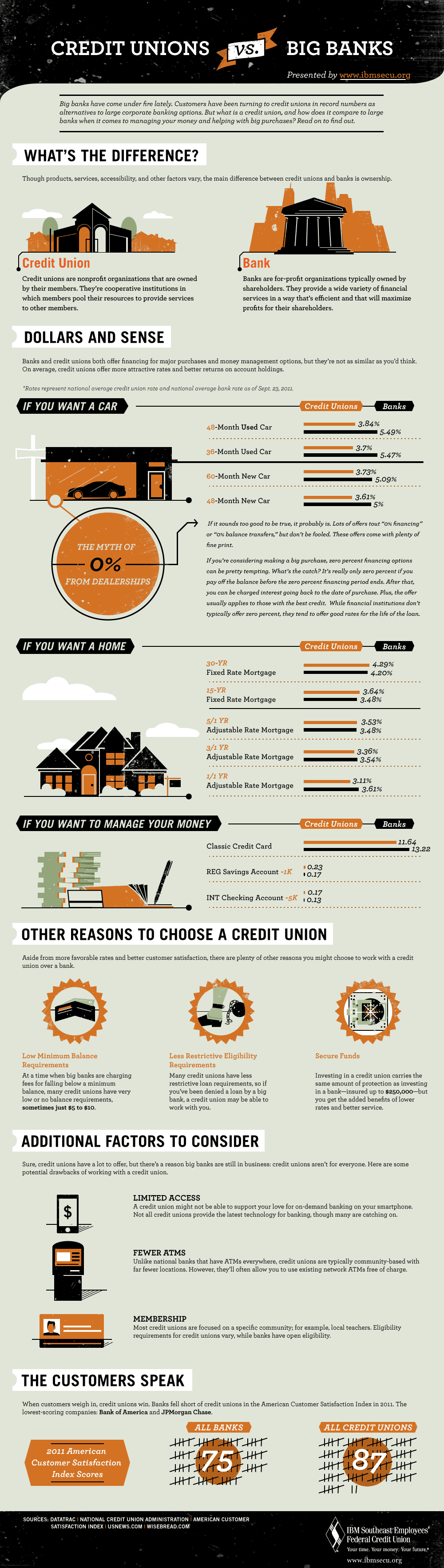
Credit Unions vs. Big Banks. The battle between the heavyweight champ (big banks) and the flyweight contender (credit unions) goes on. Where would you rather keep your banking?


*          *          *

Len Penzo is an electrical engineer with a good head for personal family finance. He is a recommended blogger by Kiplinger Reports who named him one of “Kiplinger’s Personal Finance Best Money Blogs.” I like to read Len’s blog weekly.

What I like best about Len’s blog: “Well, my blog is all about being personally responsible – not only for our personal finances, but also for everything else we do in life.  As you will learn from my blog, the great thing about financial freedom is that anyone can attain it — regardless of income level!”
http://lenpenzo.com/ Len Penzo - Finance Blogger

*          *          *

Don’t forget that this weekend is the Summer’s Hottest Car Sale!!!

The parking lot at our main office will be filled with recent model pre-owned cars this weekend. We have some outstanding financing deals for those who qualify.

July 13 - Saturday from 9am – 6pm
July 14 - Sunday from 10am to 5pm

Meriwest Credit Union Main Office
5615 Chesbro Ave
San Jose CA 95123

Don't forget to "LIKE" us on Facebook: http://www.facebook.com/MeriwestCreditUnion

Federally insured by NCUA. We do business in accordance with the Federal Fair Housing Law and Equal Credit Opportunity Act.
Copyright 2013 Meriwest Credit Union. All rights reserved.

Friday, June 28, 2013

Real Estate and Home Equity Lines of Credit


Is it time to renovate your kitchen or bathroom? Do the floors in the living room need refinishing or the house need paint outside? All of these can be expensive and we don’t always have adequate savings to pay for major remodels. What are our options? A home equity line of credit can be our savior.

A home equity line of credit or HELOC in banking parlance, is a mortgage secured by your home with a deed of trust. It can be a first or second mortgage depending on your home’s current encumbrances.

A second mortgage can be a loan or a line of credit with the line of credit option the most popular. By taking a fixed term loan, one must start repayment with interest immediately on a monthly basis; even if you have not used the funds yet and they are sitting in a savings account. There are times and places where a loan may be a good option for your second mortgage.

The HELOC tends to fill the bill rather nicely for renovations and remodels. The interest rate is based on one of the common indexes like the LIBOR (London Inter Bank Offered Rate) or the Wall Street Journal Prime Rate which is an index based on the prime lending rate of 30 banks. A prime lending rate is the rate at which the bank lends to its best customers. The adjustable rate of the HELOC usually is a “prime plus” interest rate. This may be prime plus 2%, 3%, etc. The rate will change as the market changes. If today’s prime rate were 3.5% and your HELOC was prime plus 3%, your rate would be 6.5%.

A HELOC is a line of credit where its maximum loan amount is based on your home’s value. Most financial institutions will allow you to encumber up to 80% of your home’s value with a HELOC. We refer to this as a loan to value ratio or LTV. Here is an example of loan to value calculation for a HELOC:

Home Value:                $300,000
First Loan Amount:       $180,000
Max Equity 80%LTV   $240,000
Max HELOC               $ 60,000

In the case above, the home would qualify for a $60,000 line of credit.

This house qualifies but does the homeowner? In underwriting, we will match up your
housing costs (principal, interest, taxes, and insurance) with any additional debt you may have to determine the amount you have available to pay on your debts. This ratio can be calculated as 35% to 45% depending on the underwriting guidelines of the institution. In example: If the ratio is 40%, the maximum debt to income ratio amount would be $400 for each thousand dollars in income.

The home equity line is an excellent way to leverage the unused equity in your home and make substantial improvements that can increase the value of your asset. Here at Meriwest Credit Union we can typically provide a preliminary approval within 24 hours. These HELOC deals run about 3 weeks from start to finish. The main hold up is getting the appraiser to the property. There are a limited number of them and a great many properties waiting for to be appraised.

Interested in doing some work on your home? Here is a link to our Home Equity Line of Credit page.

Federally insured by NCUA. We do business in accordance with the Federal Fair Housing Law and Equal Credit Opportunity Act.
Copyright 2013 Meriwest Credit Union. All rights reserved.


Friday, May 17, 2013

Over Your Head Financially? Here are your top ten indicators...


 1. Carrying a balance on a credit card. If you are not paying them off, you are paying interest. If you could shift all the interest you paid on your consumer credit cards to your retirement account, how rich would you be? 


2. You use payday loans to make ends meet at the end of the month. Bad consumer! 

3. You’ve been turned down for a consolidation loan. This is a sure sign you are already over-extended and that your debt-to-income ratio is too high. Time to budget your expenses and start paying down what you owe! 

4. You’re hiding your spending behavior from family members. This red flag indicates that you are aware of your personal finance problems, but are unable to acknowledge it. Fighting with your spouse is a related indicator as financial troubles often lead to domestic trouble.

5. You finance your vehicle for more than five years. This may be a clear sign that you’re buying more vehicle than you can reasonably afford.

6. You get more than one late notice per year. On occasion, everybody may let a bill fall through the cracks and forget to pay it. But if you find yourself getting multiple late notices for bills, especially for utilities, then that’s a signal that your finances may be in serious trouble.

7. You get more than one bounced check per year. Again, most folks have had an occasional overdraft of their checking account. But if this happens more than once per year, it’s usually a sign of trouble.

8. You need a co-signer to get a loan. Those without a credit history can ignore this warning sign. However, for everyone else, the need for a co-signer indicates that banks no longer find you credit worthy.

9. You find yourself borrowing from your family and friends. We have heard that borrowing from friends or family is a surefire way to sow the seeds of discontent — especially when you fail to pay the money back.

10. You lack an emergency savings account of at least three months living expenses. Those who are living from paycheck to paycheck can be completely derailed by even the most modest unexpected expenses, such as the need for major car repairs.

Credit: Credit Unions are providing their members and the public with more financial education classes than ever. This is done for free as a community service to their neighbors. Yeah! 

Debit: Over the past year, several national banks have raised fees on their checking overdraft and non sufficient funds transactions. Boo! 

Our Next Financial Workshop:
May 22nd - Preventing Identity Theft -6:30pm
Meriwest Credit Union Main Office at 5615 Chesbro Ave, San Jose CA 95123
RSVP with Greg Meyer at gmeyer@meriwest.com or call at 408-365-6328

The Long Shadow of Bad Credit in a Job Search: How does your credit effect your ability to find a job? This story, from New York Times Business Day section, will give you some insights into how hiring managers view your credit report. Click the link and learn! 


Len Penzo - One of the great financial bloggers! Check out his blog here: LenPenzo.com

Thursday, March 28, 2013

Questions About Your Credit You Should Know the Answers To


What is a good credit score? Lenders see the FICO score as an indicator of risk. The higher the score, the odds are favorable that loan repayment will take place. As the score gets lower, the odds decrease that payments will be made on time. Right now, most financial institutions are looking for a FICO score of 740. This is rather high when you consider the score tops out at around 850. Prior to 2007, lenders were accepting a 680 FICO score as A- credit. Those who had a 680 then were able to access good rates and terms for their consumer and home loans. Regrettably, in the recession, people with a 680 FICO score were facing trouble with adjustable rate home loans, over-extended credit obligations, and even job losses. Many people with a good FICO score were obliged to put off payments on credit cards due to job losses. Many suffered through foreclosures on homes that had interest rates that adjusted up while the home’s value adjusted downward. As the economy improves and the job markets get better, we should see the “good” FICO score come down a bit from 740. Will we see 680 as the “good” score again? Maybe, but not for awhile.

What is your credit score? CreditKarma.com is a good site to get your FICO and Consumer Vantage scores for free. There are a lot of sales offers there, but the score info is worth it. Knowing your score and checking it at least a few times a year can help you manage your credit. If your score is low, you can look for ways to improve it such as paying down debt or settling collections. If your score is good, continue to utilize practices that maintain it like making all your payments on time and not acquiring unnecessary credit lines and credit inquiries that might negatively affect your score.

Often, a low score could be related to a delinquency, collection, or bad information. It’s a good idea for someone to view the details of the credit score to understand the steps they can take to help improve the score.

Do you know what is in your Credit Report? AnnualCreditReport.com was begun in 2002 when Congress passed the FACT Act. The Act says the FTC and the three credit bureaus shall provide U.S. consumers with a copy of their credit report from all three bureaus for no charge on an annual basis. I recommend everyone access this site every year. I hit it on or about my birthday to check my report and verify the info on there is accurate and it all belongs to me. It is a simple identity theft protection tool to which every American has access. Knowledge is power and understanding your credit report is one of the most powerful pieces of financial knowledge.

How much do I owe? This is a no brainer that people should always know. They should know what they owe in credit debt, meaning any loans and credit cards that are outstanding. They should also be aware of any Debt Collections they may have. Too many people have no idea what debts they owe. .

More importantly, I would ask the question:
How long will it take me to pay off my debt? This is the more relevant question. What resources do you have to pay your debt? Can you concentrate a greater amount of money on them from your budget to get them paid sooner? Paying down your debt improves your FICO score. Incurring high balances or maxing out cards diminishes your score. Paying down these balances props up your score and shows creditors that you are a “good risk.”

What rates are you paying on outstanding balances? Lower rates mean you can pay off your debt faster, and save money on interest payments. You should examine your loan and credit card interest rates regularly; like the same time you check your credit report. If the report is good and your score is fine, you may want to consider transferring your card balances to lower rate cards and cancelling your higher rate cards. Another option is to contact your card holder and request a lower interest rate. Closing old cards we have had for years is not always a good option as the positive history of the card usage helps our FICO score. If they will not lower your interest rate, as a consumer you have the option of moving your money should you choose. But keep in mind that some of the low rate offers may only be introductory. Know what the rate will be after that “intro-rate” expires.

How do inquiries affect my credit?  It is important to know that multiple inquiries from different creditors can be trouble for your score. Applying for multiple credit cards at once is not a good idea. Each inquiry will take a few points off your score. It’s not a lot, maybe 8-14 pts depending on your credit standing and they only last a year against your score. But, multiple inquiries from various creditors can generate negative effects your FICO score and then you have to wait for them to drop off for your score to improve. Multiple inquiries from auto and home lenders in a short amount of time can be combined into one inquiry. You were not shopping for five cars at five auto dealers! You were shopping for one car and one loan at multiple dealers. The same holds true for multiple real estate loan inquiries while loan shopping. Lesson; know what credit you want to apply for before applying.

How does cosigning for my kid’s loan affect my credit? When you cosign a loan it goes on your credit report as if you were the main responsible party. Do you know why? It is because you ARE THE MAIN RESPONSIBLE PARTY! You are the one with a credit score. You are the one with a history of repayment. The entire loan depends on your child or whomever you co-signed the loan with, making proper repayments. If they don’t, the financial institution will look to you to make the loan good. The balances incurred by both parties on the loan will have an effect on your overall balances owed to creditors as if it were your loan. If you cosign for a credit card and the balance is used to maximum limit, that high balance could and most likely will have a negative effect on your FICO score. If co-signing for a family member or friend, think twice. Parents, things get better when your children can apply for credit on their own without your help. 

Federally insured by NCUA. We do business in accordance with the Federal Fair Housing Law and Equal Credit Opportunity Act.
Copyright 2013 Meriwest Credit Union. All rights reserved.

Friday, December 21, 2012

Consolidating Debt with Personal Loans - Good idea?


The New Year is nearly here. A lot of us are thinking about our finances and how we can improve them in 2013. Personal loans play an important role for those who are trying to get out of debt quickly. Properly used, they can be an easy way to paying off high interest credit card debt. If they are used improperly, they are a fast ticket to a lower credit score.

Let’s keep in mind that bill consolidation, from the standpoint of a credit union, means eliminating debt, building credit scores, and creating a consumer solution that can be easily managed based on the member’s income. Depending upon the extent of the member’s debt, we will often ask that they close several of their outstanding credit cards. Why? It will do no good to consolidate their debt and have them run it back up. We will take a look at their credit and income to determine what credit can be retained by the member and what they would need to close in order to receive the loan or line of credit for the bill consolidation.

Often, CU’s will recommend a member gets credit counseling prior to their consolidation. Credit Counselors teach the member how to budget, to use their online banking to manage their finances, and help them understand the consequences of extensive debt and its effect on their credit scores. It can also be helpful if the credit union offers workshops on these subjects as Meriwest Credit Union does. For more info on personal lines of credit, click here.

Any bill consolidation should offer you a lower rate of interest than that which you are currently paying and a more affordable payment. Currently, for someone with a 740 FICO score, we can offer 15% on a personal bill consolidation loan or 10.50% on a personal line of credit. Please keep in mind the line of credit is adjustable and when rates go up, which they will, this rate could rise rather quickly.

One of the dangers of bill consolidation is irresponsible borrowers. A person can get a consolidation loan, consolidate their debts into a more reasonable and affordable alternative and then go out and acquire more debt. This completely defeats the purpose of bill consolidation and puts them on the fast track to a low credit score or worse.

We must also consider that closing out a credit card account can lower your credit score. Closing out cards that we have had for a long time will negatively effect our credit. When those credit lines are removed we lose the available line as part of our balance ratio calculation (for more info on this, see our blog “Your Fico Score, Mystery No More”) and we lose the history of managing that credit after a few months. Opening a new line can offset some of the FICO points lost to closing a line.

Don’t want to close the line of credit? You have some options. You can cut the card in half and simply not use it thus leaving the account open. If you are a disciplined person, you can lock your credit cards in a drawer and avoid using them; out of sight, out of mind.

Homeowners have another option available to them; the Home Equity Line of Credit or HELOC. The HELOC is line of credit based on your home’s equity. Typically, it has a lower rate than unsecured personal loans and may offer tax advantages for some homeowners. It is handy for home improvement, bill consolidation, and a myriad of other uses. As a matter of fact, Equity Lines of Credit are worthy of their own blog! We will have one for you on that next year.

Alternatives: There are offers from credit card vendors to transfer balances at a lower rate. They encourage borrowers to use a credit card check to pay off debt at other vendors and transfer that debt to their card. Consumers need to be mindful that the low interest rate offered on these is usually a teaser and may go up in time. Some cards may offer a lowered rate for the life of the transferred debt. These can be a pretty good deal provided the borrower is responsible and does not incur further debt during the pay off period. But don’t miss a payment! You could be subject to penalty interest and see your preferred low rate rise well above 18%.

Some things to consider before combining balances on another credit card:

-          Do you have adequate credit limit for the transfer?
-          Is the Introductory rate a temporary Teaser Rate or fixed for the term of payoff?
-          Is there a fee for the balance transfer? (this increases your cost of borrowing.)

Finally, before considering any consolidation, can you buckle down and get out of debt on your own without help? Can you rearrange your budget, be disciplined in your spending, and commit your spare dollars to paying off your debt? If one eats out for lunch everyday, it can cost over $35 a week. Bringing a lunch from home can save $100 a month. That money can go a long way toward paying off debt. On any credit card or loan, you can make larger payments and any amount you pay over your monthly interest gets credited against your principle, thus reducing the amount of interest you will pay the next month. Keep that cycle up and you will pay off your debts a lot faster.

*           *           *          

Reality Based Budgets for Teens and College Students – Jan. 16th
Our next Financial Education Workshop will be Reality Based Budgets for Teens and College Students. It is a post college simulation of renting an apartment, buying a car, and developing a spending and savings plan. It is a fun and interactive session for the whole family and really opens the door to discussions about managing money. If this is something you or a member of your family needs, please feel free to join us. These workshops are open to the public.

Reality Based Budgets
6:30pm January 16th at our Chesbro Main Office Location
5615 Chesbro Ave, San Jose CA 95123

Please RSVP with Gmeyer@meriwest.com.

*           *           *

Hungry for more information on Money Management? Check out Len Penzo’s Financial Blog. Len provides excellent financial insights with a sense of humor.