Showing posts with label heloc. Show all posts

Friday, July 12, 2013

10 Financial Infographics and a Blogger


Today, we are full of links!

Info graphics have become a big rage on the internet. They can be very useful in explaining fairly complex issues in a series of “Powerpoint” like graphics and text that can be found on one page. Wikipedia says they can improve our cognition by utilizing graphics to enhance the human visual system’s ability to see patterns and trends; a data visualization so to speak. I like them because the read fast and always leave an impression.

Here are ten infographics I found that have some very important information in them that everyone could use. I will comment a little on each…


Love and Finances. How much does love cost? It might be more than you think.

How much do Americans Save? There are a lot of demands on our wallet! As savers, how are we ranked against other countries’ savers?

Protect your Identity Online. These are simple tips anyone can use to protect them from scammers. You are only safe if you take action. No one will do it for you!

What are capital gains? If you are unsure or don’t know at all, this graphic is a terrific explanation. It is better to know now than learn too late. That could be a costly tax mistake!

How finances impact emotional well being. Do you get depressed at the end of the month when your account runs low? Do you ever get the “Day before Pay Day Blues?”

How much can you save with a Roth IRA? This is surprising! Had I started in my 20’s I would have a huge tower of beer or a huge retirement account if I invested in dollars rather than beer. This is a fun and informative graphic.

It is important for us to plan for a long retirement. If you and your spouse were 62 today, there is a 47% chance that one of you will live to age 90. Have you planned your retirement accordingly?

Do financial challenges cause divorce? Earlier, we saw the costs of love in our Love and Finance graphic. But can money also cause a divorce?

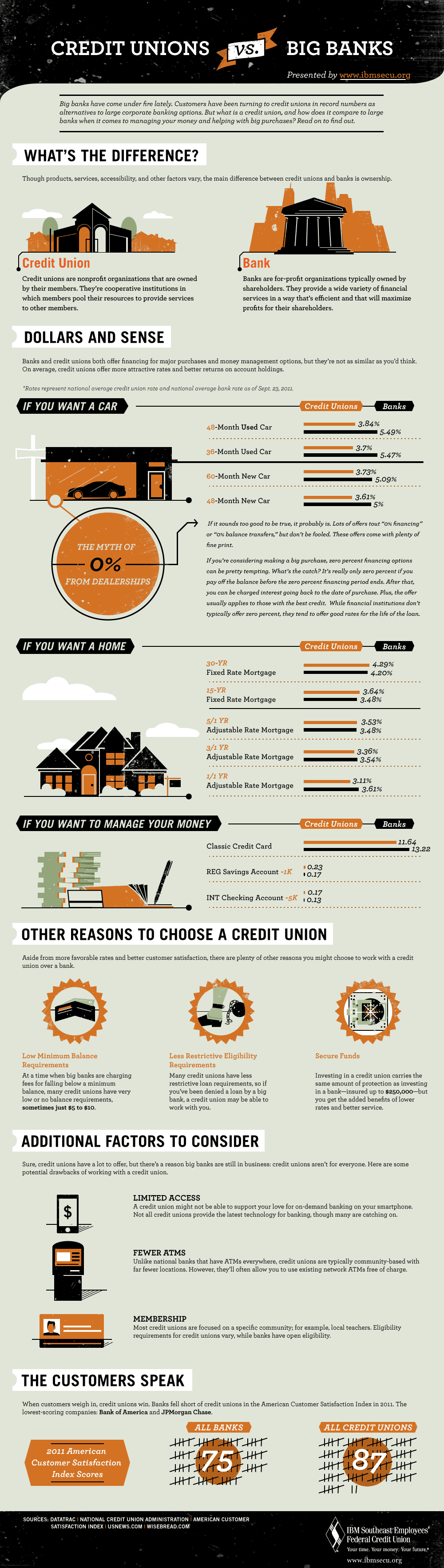
What is a credit union? This info graphic lays it out nicely for us.

Credit Unions vs. Big Banks. The battle between the heavyweight champ (big banks) and the flyweight contender (credit unions) goes on. Where would you rather keep your banking?


*          *          *

Len Penzo is an electrical engineer with a good head for personal family finance. He is a recommended blogger by Kiplinger Reports who named him one of “Kiplinger’s Personal Finance Best Money Blogs.” I like to read Len’s blog weekly.

What I like best about Len’s blog: “Well, my blog is all about being personally responsible – not only for our personal finances, but also for everything else we do in life.  As you will learn from my blog, the great thing about financial freedom is that anyone can attain it — regardless of income level!”
http://lenpenzo.com/ Len Penzo - Finance Blogger

*          *          *

Don’t forget that this weekend is the Summer’s Hottest Car Sale!!!

The parking lot at our main office will be filled with recent model pre-owned cars this weekend. We have some outstanding financing deals for those who qualify.

July 13 - Saturday from 9am – 6pm
July 14 - Sunday from 10am to 5pm

Meriwest Credit Union Main Office
5615 Chesbro Ave
San Jose CA 95123

Don't forget to "LIKE" us on Facebook: http://www.facebook.com/MeriwestCreditUnion

Federally insured by NCUA. We do business in accordance with the Federal Fair Housing Law and Equal Credit Opportunity Act.
Copyright 2013 Meriwest Credit Union. All rights reserved.

Friday, June 28, 2013

Real Estate and Home Equity Lines of Credit


Is it time to renovate your kitchen or bathroom? Do the floors in the living room need refinishing or the house need paint outside? All of these can be expensive and we don’t always have adequate savings to pay for major remodels. What are our options? A home equity line of credit can be our savior.

A home equity line of credit or HELOC in banking parlance, is a mortgage secured by your home with a deed of trust. It can be a first or second mortgage depending on your home’s current encumbrances.

A second mortgage can be a loan or a line of credit with the line of credit option the most popular. By taking a fixed term loan, one must start repayment with interest immediately on a monthly basis; even if you have not used the funds yet and they are sitting in a savings account. There are times and places where a loan may be a good option for your second mortgage.

The HELOC tends to fill the bill rather nicely for renovations and remodels. The interest rate is based on one of the common indexes like the LIBOR (London Inter Bank Offered Rate) or the Wall Street Journal Prime Rate which is an index based on the prime lending rate of 30 banks. A prime lending rate is the rate at which the bank lends to its best customers. The adjustable rate of the HELOC usually is a “prime plus” interest rate. This may be prime plus 2%, 3%, etc. The rate will change as the market changes. If today’s prime rate were 3.5% and your HELOC was prime plus 3%, your rate would be 6.5%.

A HELOC is a line of credit where its maximum loan amount is based on your home’s value. Most financial institutions will allow you to encumber up to 80% of your home’s value with a HELOC. We refer to this as a loan to value ratio or LTV. Here is an example of loan to value calculation for a HELOC:

Home Value:                $300,000
First Loan Amount:       $180,000
Max Equity 80%LTV   $240,000
Max HELOC               $ 60,000

In the case above, the home would qualify for a $60,000 line of credit.

This house qualifies but does the homeowner? In underwriting, we will match up your
housing costs (principal, interest, taxes, and insurance) with any additional debt you may have to determine the amount you have available to pay on your debts. This ratio can be calculated as 35% to 45% depending on the underwriting guidelines of the institution. In example: If the ratio is 40%, the maximum debt to income ratio amount would be $400 for each thousand dollars in income.

The home equity line is an excellent way to leverage the unused equity in your home and make substantial improvements that can increase the value of your asset. Here at Meriwest Credit Union we can typically provide a preliminary approval within 24 hours. These HELOC deals run about 3 weeks from start to finish. The main hold up is getting the appraiser to the property. There are a limited number of them and a great many properties waiting for to be appraised.

Interested in doing some work on your home? Here is a link to our Home Equity Line of Credit page.

Federally insured by NCUA. We do business in accordance with the Federal Fair Housing Law and Equal Credit Opportunity Act.
Copyright 2013 Meriwest Credit Union. All rights reserved.


Friday, November 2, 2012

Working on your Home?


You have waited a long time. You worked your way through a recession. Perhaps you have watched your home lose value and slowly regain some it back as our economy has shown signs of improvement. The time has come for you to do some work on your house that has been put off too long.

Renovating the bathrooms and the kitchen in your home can give you some good bang for your buck when it comes to increasing the value of your home. How do we pay for it? One of the best ways is to use your home’s equity to finance that improvement. A Home Equity Line of Credit can be your ticket to a new kitchen. You may be able to deduct the interest on your taxes (check with your tax consultant). 

Here at Meriwest Credit Union, lines up to $250,000 have no application fees nor do they have any third party fees like title costs. Also, interest rates are at their lowest point in years, meaning you can save a lot of money in interest charges. Check our Home Equity Line of Credit Page or contact your local Meriwest Credit Union Financial Services Representative for details. Now let's talk about unlicensed contractors.

Beware of Unlicensed Contractors

It is about this time of year when someone with a pickup truck and a smile may knock on your door, mention something about your house that may need work, and they'll offer to do it at a cost that seems almost too good to be true.

Frequently, they'll tell you they were working in the area anyway, which is part of why the job will be so cheap. But it pays to do a bit of research. Here's why:

Liability. Legitimate businesses carry two kinds of insurance that protects both themselves and you, the customer...
  • Liability insurance. If the contractor or his employees cause damage to your property, or a neighbor's property, they will generally carry insurance or have posted a bond to ensure that they can make good on any damages. Sure, you can file a lawsuit and maybe win a judgment. But having a judgment and collecting on it are two different things. A licensed contractor will generally have enough insurance coverage to ensure you will be made whole in case of any kind of claim.
  • Workers compensation. Unlicensed contractors typically don't provide workers compensation coverage to their workers. Most states require this coverage, which covers any medical costs incurred by workers injured on the job, as well as some disability benefits. If a worker gets injured on the job, and this insurance isn't in place, that worker could sue both the employer and you, the property owner, for damages.
Jail time. It's true: In some jurisdictions, using unlicensed contractors not only jeopardizes your own finances - it's actually a crime.

Scams. Most unlicensed contractors mean to actually do the work. But one common scam goes like this: The scammer will begin work, then asks you for money "to go buy some of the materials they need." Then you give the contractor the money, and you never see them again. Or there may be an injury, for which you as the property owner are expected to provide compensation. The injury could be legit... or it could be part of the scam.

Worse yet, unscrupulous contractors could begin work, tear your roof open, for example, and then demand much more money than agreed upon to close the roof. Had you used a legitimate contractor, you would have recourse to your state licensing boards for unethical work or breaches of contract. Legitimate contractors don't want to lose their license, so they will work very hard to satisfy you as a customer and prevent racking up a track record of complaints.

How to Avoid Them
·        The simplest thing to do is ask for their license number. If they can't give it to you, or claim to be "working under someone else's license," then don't let them touch a thing.
·        Also, ensure the contractor gets a permit for any construction projects or anything that involves digging. Legitimate contractors will normally arrange for the permits themselves.
o       If they ask you to get the permit, consider that a red flag. It may be they are no longer welcome at the permit office - or they don't have the cash to get a permit. Either way, it doesn't bode well. 
·        Ask for references in your area. If the contractor has a good reputation and has provided good value and service to his customers, the contractor will be happy to share his or her references with you. No references? No Job!
·        Don’t forget to check social media like Yelp or traditional rating agencies like the Better Business Bureau. Look for a contractor with good Yelp ratings and no complaints filed at the BBB. That will make your decision a lot easier!

The Bottom Line
Using licensed contractors is a smart move in many ways: It encourages and supports the legitimate, law-abiding businesses in your community. You can generally expect a better quality of work. It encourages employment in your community, as unlicensed contractors are more prone to hire illegal workers. And it protects you against unwanted liability when things don't go as planned. You could be liable if an unlicensed contractor or one of his workers is injured on your property. Licensed, legitimate contractors will have Workman’s Compensation Insurance for him and his crew. In this case, you would not be liable for injuries incurred in the performance of the work on your property. 

*   *   *


Meriwest Pre-Owned Auto Sale 

November 10-11, 2012


Last Auto Sale of the Year!

Sale Hours:
  • Saturday, November 10: 9:00 a.m. - 5:00 p.m.
  • Saturday, November 11: 9:00 a.m. - 5:00 p.m.

Location:
Meriwest Credit Union
5615 Chesbro Avenue
San Jose, CA 95123

Take Advantage of this Event!

  • Rates as low as 1.24% APR offered to qualified members**
  • Over 200 quality pre-owned vehicles
  • Trade-ins welcome
  • Up to 100% financing available on all vehicles for qualified buyers***
  • Loan officials on-site