Showing posts with label retirement planning. Show all posts

Friday, April 11, 2014

Turbo Charge Your Retirement


Q:Hey, Credit Union Guy, I'm in my 40s and haven't saved nearly enough to prepare for retirement. How can I 'turbo-charge' my retirement savings to catch up?

 A: The good news is that you still have a lot of peak earning years ahead of you. Many people don't hit their professional stride until they reach their 40s, 50s and 60s, and they have their best earning years, by far, late in life. If you qualify for a traditional pension, so much the better, because many systems use your highest-paying three or five years to calculate your benefits. These traditional pensions, however, are getting quite rare.
   
The bad news is this: Interest rates are at or near record lows. That's great for borrowers, but it makes things a lot harder on savers. Chances are, you will need to save a lot more money to generate a given level of retirement income than your forebears did a generation or two ago.


Here are some ideas: 
Rein in spending sharply. Learn to enjoy cooking, rather than eating out. Cut back on cable TV packages and take up exercise instead. The lower your monthly expenses, the more free cash flow you will have available to invest. All solutions to your problem start with this one step.
  

Pay down consumer debt and credit card debt. With credit card interest rates in the high 20s for some people, this is often the very best return on your investment you can get. Every dollar you pay down in credit card debt sooner or later nets you a return on investment equal to the interest rate on the card - with no risk, and no taxes due. Pay it off early and keep your future dollars.
  

Next, make sure you are making the most of your tax-advantaged retirement savings opportunities. Are you working for someone else? Increase your 401(k) contributions. Maximize your IRA or Roth IRA contributions if you are eligible.


Do you own your own business? Can you start one? If so, you have some additional options: You can form and contribute to a SEP IRA, or simplified employee pension plan. This plan allows you to contribute up to 25 percent of your income from the business into a SEP IRA, or up to $49,000 per year, tax deductible. No taxes are due until you take the money out. Some businesses may be better off forming a SIMPLE IRA or Solo 401(k), depending on the specifics. Consult a qualified financial advisor with experience in retirement planning to find out which alternative is most appropriate for you and which will enable you to maximize your contributions.
  

Want more ideas? If you are self-employed and have your own business, you have few or no employees and a steady stream of cash flow, you can make nearly unlimited tax deductible contributions to an insured pension fund, under Section 412(i) of the Internal Revenue Code. (Make sure you have an experienced advisor working with you on these. This might not be a job for your nephew who is just getting started in the life insurance business).

Have you spoken to your investment advisor about the growth in your account? How much risk can you honestly accept? The saying is the higher the risk the higher the yield. Is that risk and the stress worth the yield? A good advisor will set you up with some options that can mitigate or modify your risk. 
  

Are you renting? It might be time to buy. That may sound expensive now, but interest rates are extremely low as of this writing. Even if rates rise to five percent or more, it would still be historically low. If you're in your 40s, you will have that 30-year mortgage paid off in your 70s. At that time, you may want to convert the equity in your home to a stream of income via a reverse mortgage. It's not for everyone, but if you rent rather than buy, you won't have that option. You can make that decision when you get there.
  

Above all, save money. Squirrel money away every way you can. Cash is still king, and there's no substitute for healthy cash reserves in your credit union account, whether in checking, certificates or other conservative savings options. You might not get a great return, but it's safe, secure and steady. Most of your success is going to come from controlling spending decisions, rather than from making brilliant investment decisions. Set things up so you don't have to be brilliant to succeed, just prudent.

  
*             *             *

Meriwest’s Spring Pre-Owned Car Sale is this Weekend!
Sat-Sun: April 12th and 13th
Chesbro Financial Center, San Jose, CA


Sale Hours:
  • Saturday, April 12th:
    9:00 a.m. - 6:00 p.m.
  • Sunday, April 13th:
    10:00 a.m. - 5:00 p.m.
Event Location:

Take advantage of this special event!
  • Low auto loan rates
  • Huge selection of over 200 quality vehicles
  • Up to 100% financing available for qualified buyers*
  • Fast and friendly service
  • Trade-ins welcome
Plus PRIZES and more!


Friday, February 14, 2014

Love, Money, and Joint Tenants

I can understand why married couples are often opting for separate accounts when it comes to consumer credit such as car loans and credit cards. It is mainly because the errors of one spouse normally don’t have an effect on the other spouse’s credit. If a husband has a late payment, it won’t affect his spouse’s credit. That is until they buy a house. The house is a major purchase in which both parties are deeply involved. This usually takes both incomes to make the purchase, thus both spouses are applying for credit jointly. It is usually at that point that a lot of couples start combining their credit.

But in this modern age, there are couples who are maintaining completely separate finances. There may be a variety of reasons for this. As mentioned above, a spouse may have very bad credit or perhaps even a bankruptcy on their record. The spouse may have problems managing a checking account and has repeated overdrafts or had written checks on non-sufficient funds. Many couples find that the best solution is to have a joint account in addition to each keeping an individual account.

A creditor can be justified in attaching those jointly held funds to pay a debt that only one spouse may have incurred. If a marriage is foundering or if a couple has severe disagreements about how to manage money, they may want to maintain separate accounts. With joint accounts, either party can "clean out" the other simply by withdrawing all the funds in the account.

As for savings, checking, and investment accounts it is wise to hold vesting as Joint Tenants or as a Totten Trust. In the case of a joint account, both parties, or tenants, are each other’s beneficiary. Each one is an owner of the account with equal rights of ownership and transaction.

One might explain Joint Tenancy as: Each tenant owns 100% of the account. Should one owner die, the other has the “right of survivorship” and will take over the funds without probate upon the death of the other joint owner. This is the most common form of account vesting for married couples here in California.

A Totten Trust places a beneficiary or multiple beneficiaries on an account. In the case of the accountholder’s demise, the funds go directly to the beneficiary without having to go through probate. It is a very simple process. In the case of multiple beneficiaries  the funds are divided equally between them. A Totten Trust can be very helpful when a couple is hesitant to have joint accounts for any reason but do wish to leave their assets to each other.

Of course, the difference is that in the Totten Trust the beneficiary has no rights to transact on the account while the accountholder is alive. In a joint account, each joint owner has equal rights to transact on the account.

If you have a complex estate or have multiple beneficiaries, it may be helpful for you to have a Family Trust or what is also known as a Revocable Living Trust. These types of trusts allow you to have very detailed instructions on how your estate is distributed. For more information on Living Trusts, please contact an attorney who specializes in family and trust law.

Love is good but it does not pay the bills or pay them on time, nor is love a good retirement planner. Sometimes love has to take a back seat to the realities of financial acumen and management. Today more than ever, your choice of a spouse can make a difference in the way you approach your finances. A spouse with poor credit and poor money skills who lack savings or a 401k could create an uphill battle for spouses who are good at money management. Let’s keep in mind that 70% of all marital arguments are about money! Ouch! Money is often cited as the cause of divorce.

One thing I have heard that is encouraging: If nearly 50% of marriages end in divorce, then over 50% last forever! That’s a stat I can live with.

Financial questions to ask before getting married
Questions you might ask yourself prior to making this financial decision:
  • Do I want a joint account with this person?
  • Do I trust this person to communicate with me about our spending plan?
  • How did his/her parents manage money?
  • How well does this person manage money?
  • Does this person take risks with their investment money or are they conservative? Has this person had a big loss due to a poor investment decision?
  • Will you pay the bills together or is one person to be responsible for them? Which way are you most comfortable?


 *   *   *
FREE Financial Education Class JUST for Teens

Teens: Learn what it's like to be on your own in the Real World.


Whether you're starting high school or about to graduate from college, learn the necessary skills to start making smart money decisions.

Teenagers learn about the real world of
living on their own!
Teens learn what it's like to really live on their own and learn about budgets and how to maintain a good credit rating

Real World Budgeting
Wednesday, February 19, 2014
6:30-7:30 p.m.


Meriwest Credit Union
Chesbro Financial Center
5615 Chesbro Avenue
San Jose, CA 95123


Attend this FREE, fun and interactive class made just for teens! Various life scenarios involving everyday finances are covered:
  • Learn how to make wise money decisions when starting an "adult life".
  • Learn tips and find out the steps on how to rent that first apartment.
  • Learn the best tricks for making ends meet when you are on your own.
  • Find the hidden costs of being on your own.
  • Learn how saving money can improve your lifestyle.
  • Learn how your down payment on your first car can effect your payment and interest rate.
Teens, learn what it's like to be on your own in the real world!

Parents are also welcome to attend.

RSVP today to Greg Meyer, Community Relations Manager - gmeyer@meriwest.com or call (408) 365-6328

Friday, July 12, 2013

10 Financial Infographics and a Blogger


Today, we are full of links!

Info graphics have become a big rage on the internet. They can be very useful in explaining fairly complex issues in a series of “Powerpoint” like graphics and text that can be found on one page. Wikipedia says they can improve our cognition by utilizing graphics to enhance the human visual system’s ability to see patterns and trends; a data visualization so to speak. I like them because the read fast and always leave an impression.

Here are ten infographics I found that have some very important information in them that everyone could use. I will comment a little on each…


Love and Finances. How much does love cost? It might be more than you think.

How much do Americans Save? There are a lot of demands on our wallet! As savers, how are we ranked against other countries’ savers?

Protect your Identity Online. These are simple tips anyone can use to protect them from scammers. You are only safe if you take action. No one will do it for you!

What are capital gains? If you are unsure or don’t know at all, this graphic is a terrific explanation. It is better to know now than learn too late. That could be a costly tax mistake!

How finances impact emotional well being. Do you get depressed at the end of the month when your account runs low? Do you ever get the “Day before Pay Day Blues?”

How much can you save with a Roth IRA? This is surprising! Had I started in my 20’s I would have a huge tower of beer or a huge retirement account if I invested in dollars rather than beer. This is a fun and informative graphic.

It is important for us to plan for a long retirement. If you and your spouse were 62 today, there is a 47% chance that one of you will live to age 90. Have you planned your retirement accordingly?

Do financial challenges cause divorce? Earlier, we saw the costs of love in our Love and Finance graphic. But can money also cause a divorce?

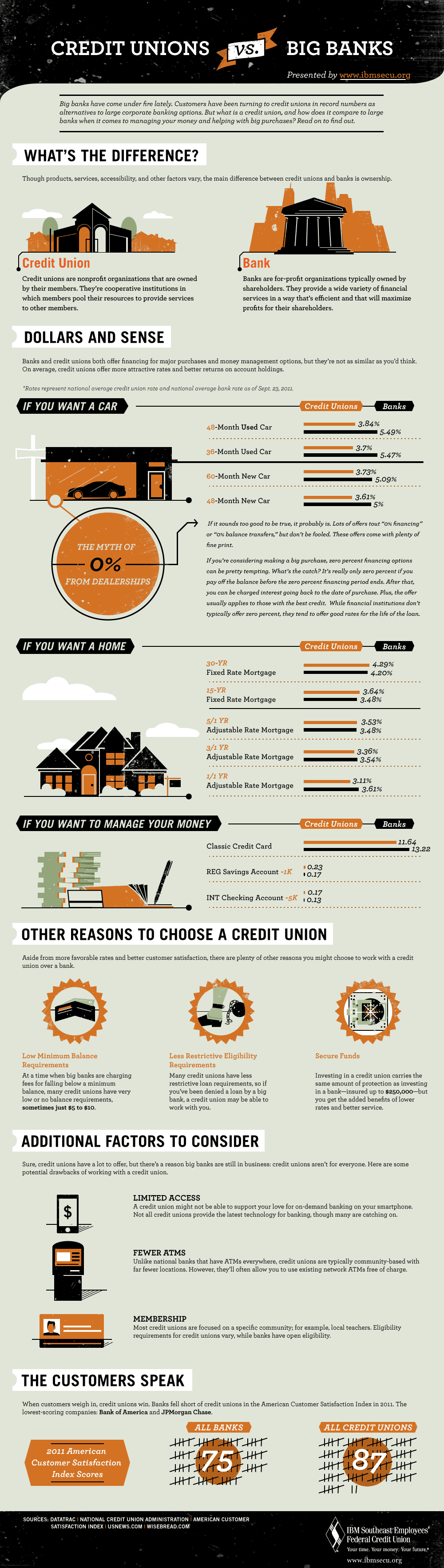
What is a credit union? This info graphic lays it out nicely for us.

Credit Unions vs. Big Banks. The battle between the heavyweight champ (big banks) and the flyweight contender (credit unions) goes on. Where would you rather keep your banking?


*          *          *

Len Penzo is an electrical engineer with a good head for personal family finance. He is a recommended blogger by Kiplinger Reports who named him one of “Kiplinger’s Personal Finance Best Money Blogs.” I like to read Len’s blog weekly.

What I like best about Len’s blog: “Well, my blog is all about being personally responsible – not only for our personal finances, but also for everything else we do in life.  As you will learn from my blog, the great thing about financial freedom is that anyone can attain it — regardless of income level!”
http://lenpenzo.com/ Len Penzo - Finance Blogger

*          *          *

Don’t forget that this weekend is the Summer’s Hottest Car Sale!!!

The parking lot at our main office will be filled with recent model pre-owned cars this weekend. We have some outstanding financing deals for those who qualify.

July 13 - Saturday from 9am – 6pm
July 14 - Sunday from 10am to 5pm

Meriwest Credit Union Main Office
5615 Chesbro Ave
San Jose CA 95123

Don't forget to "LIKE" us on Facebook: http://www.facebook.com/MeriwestCreditUnion

Federally insured by NCUA. We do business in accordance with the Federal Fair Housing Law and Equal Credit Opportunity Act.
Copyright 2013 Meriwest Credit Union. All rights reserved.

Friday, May 3, 2013

Helping your Kids buy a Home


It is nice to help our kids buy a house. But it is equally important that we keep it “business.” If you loan them part of the downpayment or provide a loan to cover a gap in the financing, i.e. the kids come in with 20% down, take a 70% first mortgage and need 10% lent to them by the parents because the payments on an 80% first would be too much for their budget. The “Parental Second” can be creative. You can have the interest paid monthly or accrued to be paid annually. If you don’t have a payment plan and are letting the interest accrue, you can also compound the interest monthly or annually to increase your yield on the loan. Just remember that any interest earned, whether deferred or paid regularly, is regular income and subject to IRS taxation.

There is some bookkeeping to be done by Mom and Dad. The parents are required to provide their kids with a 1098 to document their interest paid so the kids may deduct the interest from their taxes.

For some parents, earning 3% or a bit more on your money is a pretty good deal considering how poor savings rates are today. Of course, your loan is in second position and, historically, loans in secondary positions usually have a greater interest rate than the first mortgage due to the greater risk accepted by the lender in second position. If a borrower defaults on the first mortgage, the holder of the second mortgage must make up the financial shortfalls on the first mortgage to make good his claim on the property. So asking for >4% is not unusual for a second mortgage. Many financial institutions are asking for prime plus one point on business loans. Wall Street Journal prime is 3.25% so, prime plus one is 4.25%. That might be a very satisfactory rate for a family loan. Let’s keep in mind, historic rates for home mortgages are up in the 5’s. Thus, 4.5% is still a pretty good deal.

Hmmmm, could a loan like this become part of your retirement income? If you are retired, this sort of thing can be helpful to your income. $40,000 at 4.5% generates about $150 a month in interest income. That's a nice supplement to someone's Social Security.

Of course, I suppose that each of us knows our kids and whether or not they would be a responsible adult and repay their loans; particularly loans from their parents! Let’s keep in mind that we need to go all the way and file a deed of trust and have your kids sign a promissory note that details how the loan is to be repaid. If you don’t do that, you deserve all that you are not repaid! The deed of trust protects your loan interest and your interest in the property. Without it, should you kids fail to pay, your ability to get repaid thru the trustee sale or foreclosure sale of the home will be compromised.

Emotional? Yes, there are a variety of ways for this to become an emotional mess. Is the parent depending on the interest from this loan to help with their retirement income? A missed payment in this case could be very critical. Suppose the son or daughter is involved in a large lay off? Even worse, their job is in low demand and finding a new job will take a lot of time. During this lay off, they stop paying their first mortgage. It is then the responsibility of the second mortgagor to make good the first mortgage to keep the first lender from filing foreclosure. Can all parents afford to pay this for their kids? That is a lot of stress and demonstrates for us the emotional issues that can come with lending to our kids. 

*   *   *

Our next financial education workshops will be presented at our main office on Chesbro Ave in San Jose. This month we are offering "Establishing Credit" on May 15th which is a good course for high school and college students, but really works well for anyone interested in how credit gets established. 

On the 22nd we will be offering "Preventing Identity Theft" at our main office. This workshop provides you with all you need to know to prevent identity thieves and protect your good name from those who would use it for criminal acts. Get ready for summer vacation with our preventing identity theft class. 

May 15th - Establishing Credit - 6:30pm 
Meriwest Credit Union Main Office at 5615 Chesbro Ave, San Jose CA 95123
RSVP with Greg Meyer at gmeyer@meriwest.com or call at 408-365-6328

May 22nd - Preventing Identity Theft -6:30pm

Meriwest Credit Union Main Office at 5615 Chesbro Ave, San Jose CA 95123
RSVP with Greg Meyer at gmeyer@meriwest.com or call at 408-365-6328
 

Friday, January 4, 2013

Setting Financial Goals...And Reaching Them!


Are your financial goals set in concrete or can they be blown away as easily as a dandelion? 

Achieving your dreams and creating the financial future you want always begins with one important first step: a goal. Whether you're looking to help your child set goals so she achieves academically or have your own financial or self-improvement goals for the New Year, there IS a science to setting and meeting them.

A 2010 study in Applied Psychology followed college students who went through a multi-step goal setting program. Those who followed it completely showed significant improvement in their grades compared to those who did not.

While New Year's resolutions are notoriously short-lived, a clear process will put any objective you've set for yourself within reach. No matter what you have in mind, you can apply these steps to whatever goals are important to you, and the whole process should take less than 90 minutes.

1. Take a few minutes to write about the financial future you'd like to achieve. It's okay to start with a vague idea, but include as many specific details as possible.

2. Looking at the financial future you've envisioned for yourself, pick six specific and attainable financial goals that could help you achieve that future.

3. Number your goals according to their order of importance.

4. Look at each goal and write a paragraph about how achieving that specific step will benefit you.

5. For each financial goal, break it into smaller more manageable steps.

6. Identify obstacles that may get in the way and come up for a strategy for overcoming them should you need to do so.

7. Write about your commitment to reaching these ultimate financial goals.

That's it. Sound easy? Perhaps. But by taking the step of committing your goals to paper and working through these steps, you've laid the groundwork for success.

A goal is simply a dream with a deadline....may all your dreams come true!

*    *    *

Reality Based Budgets for Teens and College Students – Jan. 16th
Our next Financial Education Workshop will be Reality Based Budgets for Teens and College Students. It is a post college simulation of renting an apartment, buying a car, and developing a spending and savings plan. It is a fun and interactive session for the whole family and really opens the door to discussions about managing money. If this is something you or a member of your family needs, please feel free to join us. These workshops are open to the public.
Reality Based Budgets
6:30pm January 16th at our Chesbro Main Office Location
5615 Chesbro Ave, San Jose CA 95123
Please RSVP with Gmeyer@meriwest.com.


Thursday, September 20, 2012

Increase Wealth and Decrease Tax by Planning Your Tax-Deferred Withdrawals


Want to preserve more of your money while decreasing your exposure to tax? The best way to do that is by strategically planning how you withdraw money from your tax-deferred accounts like your 401K’s or Traditional IRA’s.

For most accounts - including savings accounts and investment portfolios - you are required to pay taxes during the year that you receive income (from interest or dividends, for example). But with a tax-deferred account, you put off the payable tax until you withdraw the money from your account. You're not taxed on the money you've earned in the account. Instead, you're taxed on the money you take out of it.

A savvy accountholder will time their withdrawals to reduce the amount of tax they owe and thus increase the amount of money they get to keep. They do this by withdrawing money during a year when their income is low (such as during a period of unemployment or retirement). This puts them into a lower tax bracket so they pay less tax on their withdrawals.

Compare this to someone who is earning six figures and withdraws money from their tax-deferred account. Because they are already in a higher tax bracket, their withdrawal adds more money to their taxable income.

The only time to consider taking the higher taxes is when you can put that money to work in an investment that will earn back far more than you expect to lose from the added tax. But, there are times when we don’t have a choice in taking money out of our retirement accounts. I am referring to the Required Minimum Distribution.

With a Traditional IRA or a 401K, one thing to consider is that at one point in your future, you will have to start taking money out of your retirement fund. This is referred to as the RMD or Required Minimum Distribution. Uncle Sam will not allow us to keep our money earning deferred interest forever! He giveth the tax deferred account and he taketh away our taxes. How? At age 70.5, or seventy and a half, you will be required to take a minimum amount out of your retirement accounts on an annual basis regardless of whether you are retired. How is that amount calculated? Well, the best way to find out your minimum distribution would be to check on IRS Publication 590, “individual Retirement Arrangements” (hard) or you can contact your IRA custodian/administrator and ask them (easy). The RMD rules also are enforced for other retirement plans such as the 403B, SEP IRA’s, and Basic Retirement Plans. Each has very specific rules so contact your retirement custodian/administrator and ask them about your specific situation.

You work hard for your money and saving for the future in a tax-deferred account is smart. Protect your wealth and reduce the taxes you owe by making sure your withdrawals coincide with times when you are in a lower tax bracket.

*   *   *


Our next Financial Education Workshop will be taking place in our main office next week: 

Sept. 26th 6:30pmCredit Myths and Repair – Learn the top ten myths of credit management, how to access your credit report for free, and how to address information on your reports that is inaccurate, invalid, or out of date. Thousands of South Bay residents have benefitted from this workshop over the past five years. Please contact me to RSVP for the workshop. Gmeyer@meriwest.com or 408-365-6328.