Showing posts with label FICO Score. Show all posts

Friday, March 28, 2014

Zombie Debt

Even Zombies say, "Zombie debt bad!"

Zombies are more popular now than at any time I can remember. There are new zombie movies coming out, zombie games, zombie parties, and even self-defense products for the upcoming zombie apocalypse.  There is one more Zombie Threat you must protect yourself from, ZOMBIE DEBT!

Zombie Debt is a collection that has been “termed” off your report. In other words, it has reached its seven year expiration and been removed automatically from your credit report. Then collectors try to call and collect on “Dead Debts” or “Zombie Debts.” It is as if the seven plus year old debt has risen from the grave and come back to haunt us. Imagine your old debts doing the slow zombie shuffle to your door yelling, “Pay me, pay me!”

Zombie Debt Collecting is becoming more common. This is particularly true with people who don’t track their finances well and don’t follow their credit report. Bill collectors are taking advantage of their naiveté and making threats about legal actions if payments don’t start right away. These tactics are working in the lower income communities. Typically they are going after old credit card debt.

Consumers need to know their rights in regards to credit reporting. I present a workshop in the community and at my credit union titled, “The Myths of Credit.” The presentation goes over the top ten myths of credit and an emphasis is put on managing and understanding collections. Too many people don’t understand that a collection can only be collectable for seven years and not beyond that. However, these collection agents continue to attempt to collect debts that are well beyond the seven year period. Also, once families go into an agreement with the collector on a Zombie debt, they need to stick to it and make their payments as the collection agent could now make this a new collection for nonpayment due to the payment agreement/promissory note the consumer might sign.

How should a person handle collection calls and avoid Zombie Collections? Regrettably, it is not as simple as shooting a zombie in the head and ending the threat.

Before a collector calls:

1.       Access your credit report through AnnualCreditReport.com. You can access all three bureaus’ reports here. You will never be in the dark about your credit status. You will always know when a collection has gone on to your report and when it expires. This is a free service.

2.       Sign up for CreditKarma.com. They will notify you of any changes in your score and provide the info for those changes; such as a collector “re-aging” a collection or putting an old expired collection back on your report with a new date to make it appear current. This is also  a free service.

When a collector calls:   
  1. Don’t admit to anything. Don’t agree to payments. Your agreement to making payments  or even acknowledging the debt could provide the company the legal right to collect the debt and may reinstate a dead debt and make it a real Zombie!
  2.   Make them identify themselves and the details of the debt they are collecting; dollar amounts and the date the collection became active on your credit report (AKA First date of delinquency: The legal term for the first day a debt goes on your credit report). This date can clue you into whether they are collecting on a Zombie debt.
  3.  Don’t fall for the traps. Agencies will sometimes “re-age” the debt, (reporting the debt to the credit bureau as if it’s new). They might promise to wipe off the “red checkmark” on a credit report, of sometimes do a “bait and switch” where they tack on the balance of a zombie debt to a new credit card offer. 
  4.  Ask them to validate the date and amounts of the collection and send them to you in writing. This should also include asking them for the credit card agreement you signed. Double check the statute of limitations in your state. Generally, seven years is the accepted period of collection. If the debt was discharged thru a bankruptcy they cannot collect it.
  5.  If you have determined that you are not responsible for the debt due to age of the debt or other written agreements such as settled or paid in full, write a letter to the collection agency and inform them that you will not pay the debt and share the reason for it as well as any copies of evidence you have showing the debt is no longer collectible.
  6.  Collectors often like to threaten payees with court. “If you don’t pay this, we will take you to court!” With most modest credit card debts it is just not economically feasible to hire attorneys to go after the payees. This is a common threat with Zombie debt. If your debt is expired and the collector makes this threat, it is an empty threat with nothing to back it up. No one is going to spend big money ($500 per hour!) to hire an attorney and pay for court costs to collect small expired debts.  
  7.  Check your credit report annually. Review it and compare it to the previous year’s report and determine that all items on the report are current and valid.


  *   *   *

Save The Date!
Meriwest Spring Pre-Owned Car Sale
Sat-Sun: April 12th and 13th
Chesbro Financial Center, San Jose, CA
Sale Hours:
  • Saturday, April 12th:
    9:00 a.m. - 6:00 p.m.
  • Sunday, April 13th:
    10:00 a.m. - 5:00 p.m.
Event Location:
Take advantage of this special event!
  • Low auto loan rates
  • Huge selection of over 200 quality vehicles
  • Up to 100% financing available for qualified buyers*
  • Fast and friendly service
  • Trade-ins welcome
  • Plus PRIZES and more!


Friday, September 20, 2013

Going from Bad to Worse – Collections are a Curse!


What do you know about collections? I get a lot of questions like: How long can they stay on my credit report? What effect do they have on my credit score? What’s the best way for me to pay them off and get them out of my life? 

Do you wonder about these things? A lot of folks do. Every day I get questions from our members about collections and how they affect their credit. Let’s see if I can give you some answers!

A collection takes place after we have been delinquent on a payment. That payment can be on a utility, a loan or a payment for other services where you may be billed later like a carpet cleaning. Technically, you can be late up to 89 days on your utilities like your water bill, heating bill, or even your phone or cellphone bill, even that invoice from the carpet cleaner. So long as you pay it by the 89th day, no one at the credit bureau needs to know about it. Sure, the water company might charge a late fee or the cellphone provider might temporarily cancel your internet service, but it will not appear on your credit report and cost you a reduction in your credit or “FICO” score.

But, if you allow that bill to go unpaid that additional day so that is it 90 days late, your credit score will suffer. As a general rule, most businesses turn unpaid debt that is 90 days old to their internal collection departments or they may sell unpaid debt to a collection agency for further collection. What that means to you is a severe beating of your credit score. If you had an excellent score, it is now just okay. If you had a good score, your score has dropped significantly. An unpaid collection on your credit has the same power on your score the first day as it does seven years later when it expires and drops off your report! Unpaid collections drag your score down and prevent you from accessing future credit on good terms and rates.

My debt went 90 days delinquent and now a guy named Ralph is calling me from the collection agency. What can I do to stop this? You have a right to privacy and can write them a letter requesting they stop calling you. That’s the law and it works! Write the letter telling them to stop calling you and send it certified mail to the collection agency. Then, they can only call you to tell you they will stop calling or if they decide to take further legal action. Otherwise, all phone contact stops. Remember to keep a copy of your letter!

However, the best recommendation is to pay it and get it out of your life. This sort of debt is not your friend. Once you pay a collection, it changes from an upaid, also known as an open collection, to a paid or closed collection. Immediately upon paying it, your credit score will bump up a bit. As time goes by and the debt is 24 months, 36 months, and further into your past, you will see your score improve. With the collection’s status changing from an open/unpaid collection to a closed/paid collection on your credit report; it will still be a negative item, but much, much less than a collection that is unpaid. It will remain on your report for the balance of the seven years after you have paid it; i.e. if you pay it after two years, it will show as a paid collection for the five remaining years. 

With older collections some agencies may be inclined to provide you a fairly steep discount to pay them. Collection agencies buy your debt at a discount. You just have to ask for a lower pay off amount and start negotiating with the representative. If you decide on an amount, get it in writing and attach your check to it when you pay it. Then you have a contract with the agency. Do not send any money until you get your agreement in writing. 

Also, good debt offsets bad debt. This means that if you have other credit obligations besides that one debt that went bad, each time you make a payment on them you will improve your credit position. On time payments and keeping your debt balances low and under control are the keys to improving your credit score.
  
Questions? Ask the Your Credit Union Guy, Greg Meyer at gmeyer@meriwest.com
*   *   *
 Our next Credit Myths Financial Workshop will take place this Wednesday Sept. 25th at our Main Office at 6:30pm. If you wish to join us, please contact me at gmeyer@meriwest.com or 408-365-6328 to reserve a spot. Don't be shy. We have space! 

Our October Workshops will be held at our Sunnyvale Financial Center on El Camino @ Fair Oaks in Sunnyvale. 

Auto Financing 101 
October 16th - 6:30pm to 7:30pm
Learn how to plan for, research, and negotiate your deal and financing for your next car. Be a step ahead of the car dealer. Take this class! 

Credit Myths
October 23rd - 6:30pm to 7:30pm
What are the top ten myths of credit? We will tell you and reveal the truth behind these myths. 

Both will be held at our office at 563 E. El Camino Real, Sunnyvale CA
Please RSVP with me at gmeyer@meriwest.com or 408-365-6328 to reserve your spot.

Friday, July 12, 2013

10 Financial Infographics and a Blogger


Today, we are full of links!

Info graphics have become a big rage on the internet. They can be very useful in explaining fairly complex issues in a series of “Powerpoint” like graphics and text that can be found on one page. Wikipedia says they can improve our cognition by utilizing graphics to enhance the human visual system’s ability to see patterns and trends; a data visualization so to speak. I like them because the read fast and always leave an impression.

Here are ten infographics I found that have some very important information in them that everyone could use. I will comment a little on each…


Love and Finances. How much does love cost? It might be more than you think.

How much do Americans Save? There are a lot of demands on our wallet! As savers, how are we ranked against other countries’ savers?

Protect your Identity Online. These are simple tips anyone can use to protect them from scammers. You are only safe if you take action. No one will do it for you!

What are capital gains? If you are unsure or don’t know at all, this graphic is a terrific explanation. It is better to know now than learn too late. That could be a costly tax mistake!

How finances impact emotional well being. Do you get depressed at the end of the month when your account runs low? Do you ever get the “Day before Pay Day Blues?”

How much can you save with a Roth IRA? This is surprising! Had I started in my 20’s I would have a huge tower of beer or a huge retirement account if I invested in dollars rather than beer. This is a fun and informative graphic.

It is important for us to plan for a long retirement. If you and your spouse were 62 today, there is a 47% chance that one of you will live to age 90. Have you planned your retirement accordingly?

Do financial challenges cause divorce? Earlier, we saw the costs of love in our Love and Finance graphic. But can money also cause a divorce?

What is a credit union? This info graphic lays it out nicely for us.

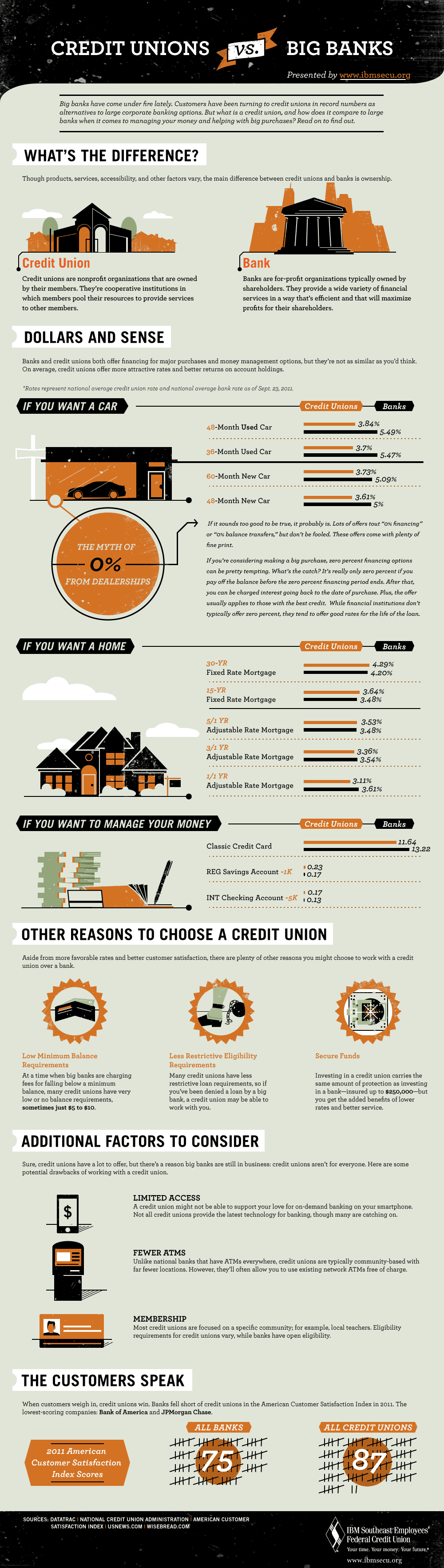
Credit Unions vs. Big Banks. The battle between the heavyweight champ (big banks) and the flyweight contender (credit unions) goes on. Where would you rather keep your banking?


*          *          *

Len Penzo is an electrical engineer with a good head for personal family finance. He is a recommended blogger by Kiplinger Reports who named him one of “Kiplinger’s Personal Finance Best Money Blogs.” I like to read Len’s blog weekly.

What I like best about Len’s blog: “Well, my blog is all about being personally responsible – not only for our personal finances, but also for everything else we do in life.  As you will learn from my blog, the great thing about financial freedom is that anyone can attain it — regardless of income level!”
http://lenpenzo.com/ Len Penzo - Finance Blogger

*          *          *

Don’t forget that this weekend is the Summer’s Hottest Car Sale!!!

The parking lot at our main office will be filled with recent model pre-owned cars this weekend. We have some outstanding financing deals for those who qualify.

July 13 - Saturday from 9am – 6pm
July 14 - Sunday from 10am to 5pm

Meriwest Credit Union Main Office
5615 Chesbro Ave
San Jose CA 95123

Don't forget to "LIKE" us on Facebook: http://www.facebook.com/MeriwestCreditUnion

Federally insured by NCUA. We do business in accordance with the Federal Fair Housing Law and Equal Credit Opportunity Act.
Copyright 2013 Meriwest Credit Union. All rights reserved.

Friday, April 19, 2013

A History of FICO Scores Part II


In the 1950’s, someone asked the question, how can we judge someone’s credit without having to read the entire credit report?

You see, not only was time an issue, reading the reports and making judgments based on the information in them became an issue. You could have two loan underwriters look at the exact same loan package and come up with wildly different opinions on a person’s credit. Some would give their approval of the loan and others denied the credit. There was no set of rules that told underwriters how to decipher and utilize the information they were gleaning from credit reports. It was all just “someone’s opinion,” very subjective.

Thousands of new borrowers were being approved daily and lenders needed a way to mitigate or gauge risk and develop a national standard for credit worthiness. In 1956, a company named Fair Isaac Company came out with a revolutionary idea; Credit Scores, also knows as FICO Scores.

How does the scoring work? FICO takes several important financial factors into account. The two most critical factors are the borrower’s payments and the balances they maintain. These items make up 65% of the score; 35% for the payment history and 30% for the balance ratio. That’s why a late payment has such a serious effect on our score. Collections are worse for us and our scores. The effect of a late payment on a loan or credit card will start to diminish after 24 months. If one has an open collection, the collection will have the same weight on their score on the last day of seven years as it did on the first day it was placed on the person’s report. The lesson here is very simple, make your payments on time and you will never have to deal with late payment issues or collections.

Balances play a role in our score if we don’t pay them down. 30% of your score is determined by the balances a person is carrying vs. how much they have available. Maintaining outstanding credit card balances by paying only the minimum payment can be very detrimental to your score. We have to make an effort to pay our outstanding balances off. For scoring purposes, the balances are added together and a ratio is calculated vs. the total amount of credit available.

The three remaining factors are our History. How long have we managed credit? That accounts for 15% of our score.

Finally, 10% each is allocated to the types of credit we manage and the number of inquiries made on our report annually.

With this data put into a computer algorithm, a number could be determined. That number would be an indicator of risk. A high number would indicate less risk is involved in lending to a person where, conversely, a low number would indicate a lower likelihood of repayment. This also led us to “FICO Score Lenders;” lenders that only grant credit based upon a predetermined level of score.

What is a “FICO Score Lender?” Typically, our major banks are using the FICO score as the primary determining factor in making their initial credit decisions. Let’s say a financial institution has 300 offices in California. On any given day, each office might send a loan application to their loan underwriting department. The underwriters, the staff who decide credit decisions, might number a dozen but receive 300 applications in one day. Prior to 1956, they would have to view each credit report to make a decision. Now, they enter the social security number of the applicant and the credit bureau gives them a number. If today’s number is 740, then any applicant with a FICO Score of 740 or above will get a further review of their loan package. The borrowers with a FICO Score of 739 or less are declined for credit as they did not make the score. Not only does the FICO Score help us determine risk, it helps lenders render faster credit decisions. Often, we can approve someone based on their credit within 24 hours.

Some may ask if using a score like this is fair. The FICO Score is basically colorblind. Credit is ultimately granted to those who have proven they can manage it well. It is typically declined for those who manage it poorly. Over the years, the score has been adjusted down for times when credit was loosened and adjusted upwards for times when we had to tighten up on the use of credit. Today, most financial institutions are looking for borrowers with a FICO Score of 740.

Are credit unions just like banks on FICO Scores? Not necessarily, credit unions generally take a more holistic approach to lending; meaning they tend to take a look at the “whole borrower,” not just their credit score. Before a credit union renders a credit decision on someone, we will take into account how long this person has been on the job? How long have they have lived in the area? How long have they been a CU member? Of course, a CU will consider their income and debt to income ratios before we provide our final decision. What this means is, if a borrower comes in with a FICO Score at 739, or 735, we don’t automatically decline their loan request. We take a wider look at our borrower to determine their creditworthiness.

Can banks help their clients with loans just like credit unions do? Sure they can, but they don’t! They will tell you they don’t have the time. It takes to much time to make decisions on marginal credit applications. Time is money and we need that money to show a profit to our shareholders.

I used to work for a bank that called itself the “Largest Financial Services Provider in the World.” One of my bosses once said to me, “We need to make profit. If we don’t make a profit, we might as well be a credit union.” As if there is something wrong with that?

*           *           *

Thank you. I hope you enjoyed our history of FICO scores. If you want to learn more about credit, please attend our next Credit Myths Workshop this Wednesday the 24th at our Monta Loma Financial Center in Mountain View: 580 North Rengstorff Ave, Mountain View CA.

To RSVP for this workshop, click this link.

Credit Myths and Credit Repair
Credit Myths and Repair    April 24th at 6pm   Monta Loma Financial Center

Learn how collections, credit inquiries, and late payments effect your credit score. What is a FICO score? You will learn how to access your credit report and your credit score for free. Learn from the experts.


Friday, December 14, 2012

Managing Holiday Credit Card Debt


Imagine yourself at a department store. You are approaching the check out. How are you going to pay for this purchase? Are you using your debit card because you planned your holiday spending? Or are you using your credit cards because your only plan is to spend and eventually pay it back?

When it comes down to holiday spending, we have a choice.

Choice #1: We can go into the holidays financially blind and spend to our heart’s content and put our heads in the sand and deal with it in the New Year. This is the way a lot of people approach the holidays and they pay for it monetarily and emotionally. Not only that, but their credit scores take a hit as their credit card balances rise. Their monthly costs go up because the minimum payments on their cards increase due to larger balances. This reduces their spending power until they pay off some of that holiday debt!

Choice #2: Go into the holidays with a spending plan that let’s you buy thoughtful gifts for your family and friends but does not allow you to break the bank. That is really the best course of action. A plan is always better than winging it and winging it with money is never a good idea. To make this action effective, you have to save before the holidays come. Set up an automatic transfer from your checking to a savings account.

Next year in January, you may want to open a “Christmas or Holiday Club” account for your holiday savings if your bank or credit union still offers that. The old club accounts had money automatically transferred from your checking account and was cashed in before the holidays and paid out to the accountholder to pay for gifts. Lacking a “Christmas Club” type of account? Open a savings especially for your holiday spending and set up an automatic transfer from your checking account each month. The automatic transfer happens without any action on your part. Just remember to enter it in your check register or monitor your online banking so you don’t overdraw your checking. When the holidays are here, draw the funds from your savings and spend it to your heart’s content.

If you must use credit to pay for your gift giving, let’s consider some things that might save us some money. Let’s assume you plan to pay this newly incurred balance off in six months. How much do you plan to spend on gifts? That’s the starting point. Take that amount and divide it by six and add that to your current monthly payment on that card. Can you afford that payment monthly for the next six months? Then you may have the right amount to spend on gifts. Is it too high? You need to adjust your spending plan, not your time horizon for pay off! Remember, extending the pay off time for any balance adds more interest to your debt. Paying interest is like renting money. Who benefits when you pay interest? Certainly not me or you. The bank does! If this sounds like a good idea, you use way too much credit and need an intervention!

But, if you really like making that monthly payment and the cost is no object for you, then you might be more inclined to take Choice #1.

*           *           *

Our next financial education workshop will be “Real World Budgets for Teens” and will be presented at our Chesbro Main Office on January 16th at 6:30pm. Real World Budgets takes a teen and their parents thru a post college simulation of managing money, a job, and the payments that come with independence. I hope you can join us.

Please RSVP with Greg Meyer at gmeyer@meriwest.com or 408-365-6328.

Click here for a list of all of our financial education offerings.

Check us out on Facebook! WWW.Facebook.com/MeriwestCreditUnion

Monday, November 19, 2012

Your FICO Score-Mystery no More!


Is your FICO score a mystery to you? Don’t feel bad, most American consumers don’t know their FICO score much less how it is determined. Generally, your FICO score can vary from 300 at the lowest to a high of 900. People ask me, “Hey, Credit Union Guy, what’s a good credit score?” Today, a good score would be in the neighborhood of 740. At this level you can access good rates on car loans, home financing, and credit cards. Go below 740 and you may find yourself paying higher rates of interest on your loans and credit cards.

“What is a FICO?” FICO is an acronym for the Fair Isaac Company; the company that invented the calculations that result in a measurement of credit risk. The score is determined by an algorithm. In a sense, it is a highly complex algebra problem that takes into account your payment history, the ratio of your loan and card balances vs. your available balances, the length of your credit history, your credit request inquiries and the types of credit you are managing. The formula for exactly how the score is calculated is proprietary information and owned by Fair Isaac.

“Why does the FICO score exist?” In the old days of lending, loan managers looked at the physical credit report for a person and made a judgment call on the risk involved with making a loan to that person. Back then, two loan underwriters might look at the same report and have very different opinions on the applicant’s payment history. Credit Scoring took the judgment call out of the process. A person either scored well or they didn’t. Another reason for FICO score is volume. As our population grew and more people started using banks and credit unions, the loan volume increased significantly. In order to speed the loan process, the FICO score was used. Loan processors can input a minimum of data and get a score for a credit decision rather than reviewing the entire credit report.
Here is an approximate breakdown of how it is determined:
·   35 percent of the score is based on your payment history. This makes sense since one of the primary reasons a lender wants to see the score is to find out if (and how timely) you pay your bills. The score is affected by how many bills have been paid late, how many were sent out for collection, any bankruptcies, etc. When these things happened also comes into play. The more recent, the worse it will be for your overall score.

·   30 percent of the score is based on outstanding debt. How much do you owe on car or home loans? How many credit cards do you have that are at their credit limits? The more cards you have that have maxed out lines, the lower your score will be. The rule of thumb is to keep your card balances at 30% or less of their limits.

·   15 percent of the score is based on the length of time you've had credit. The longer you've had established credit, the better it is for your overall credit score. Why? Because more information about your past payment history gives a more accurate prediction of your future actions.

·   10 percent of the score is based on the number of inquiries on your report. If you've applied for a lot of credit cards or loans, you will have a lot of inquiries on your credit report. These are bad for your score because they indicate that you may be in some kind of financial trouble or may be taking on a lot of debt (even if you haven't used the cards or gotten the loans). The more recent these inquiries are the worse for your credit score. FICO scores only count inquiries from the past year.

·   10 percent of the score is based on the types of credit you have. The number of loans and available credit from credit cards you have makes a difference; installment loans vs. revolving lines of credit. There is no magic number or combination of types of accounts that you shouldn't have. These actually come more into play if there isn't as much other information on your credit report on which to base the credit decision.


Questions? Ask the Meriwest Credit Union Guy at gmeyer@meriwest.com.

*   *   *

The next Meriwest Credit Union Financial Education Workshop will be our Reality Based Budgets Workshop for teens and college students on Wednesday, Nov. 28th at our Monta Loma Financial Center in Mountain View. This workshop takes through a post college money management simulation where they are given a salary, rent, car payments, and other bills and build their living budget. 

Our Monta Loma Financial Center is located at the corner of Rengstorff and Middlefield  Road in the Monta Loma Shopping Center. The program begins at 6pm. We hope you can join us. Please RSVP at our Events Link.


Thursday, August 30, 2012

The Costs of Bad Credit Part 2


The cost of bad credit can be very high; provided a credit issuer will give you credit. Last week, we looked at the costs of incurring bad credit such as late fees and higher rates. This week we will take a look at who may lend to a risky borrower and the extended cost of bad credit.

A credit score indicates to the lender the likelihood of a loan being repaid. The higher the FICO score, the more likely a loan will be repaid. Often times, those with low scores are offered a higher (AKA sub-prime) rate for car, home, and other credit purchases. It would not be unusual for someone with a low rating to be offered a 10-14% or higher interest rate on a used car loan when the prevailing rates for someone with a good credit rating would be about 7% or less. That was prior to the recent recession. Lenders are much more conscious of the defaults in subprime loans that have occurred over the past 5 years. Many have stepped away from the subprime market completely. Thus, for many lenders, either you qualify for a loan or you don’t. The subprime loan is no longer an option for many traditional lenders or many borrowers.

There are still some institutions that will lend to people with slightly less than perfect credit; they are known as credit unions. Why? Because credit unions take a more holistic approach to lending to their members. The FICO Score is important, but is not the only factor considered when lending. A credit union may require a higher down payment of subprime borrowers and/or ask them to pay a slightly higher interest rate. They will look at the applicant’s employment; how long have they worked for the same company? How long have they lived in the same home or neighborhood? How has the member managed their credit over the past 24 months? The answers to these questions may increase or decrease the interest rate or down payment.

As an example, let’s say a FICO score of equal to or greater than 740 is the target score for the institution and someone in that score range will get a rate of 2.99% for a new car loan with zero down. In this case, if someone misses the target by a bit, say the member comes in at 680, the credit union would likely make the loan with a somewhat higher rate than the base rate to help the member. Instead of 2.99%, perhaps the loan would be for 5.50%.

In this case, a car loan of $15,000 applied for a borrower with a 740 score and a borrower with a 680 score, there is a 2.51% difference in the loan rate (2.99% APR vs. 5.50% APR). The borrower with the 740 score will pay only $934 in interest over a 4 year period where the borrower with the lower score might pay as much as $1,745; a difference of $811 over the four year loan term. The borrower may not only be required to pay a higher interest rate, they may have to come up with money for an additional down payment. Subprime borrowers are often called upon to have a higher equity in their security than those with preferred rates. That is an additional cost to the subprime borrower. That is money that has to come out of savings leaving the borrower with reduced liquidity. Another cost is the loss of earned interest on the money used for the down payment. Let’s say the borrower has to put up an additional $3,000 in order to qualify for the loan, $3,000 in a savings account at 1% APY for 4 years would have earned $125. That’s better than spending an additional $800 in interest expenses.

Avoid these increased costs by managing your credit correctly.
  • Pay your bills on time and pay more than the minimum when possible.
  • Pay down outstanding balances.
  • Avoid using your entire credit available limit
  • Only apply for credit when you want it. Don’t apply for a card just to get a discount!
  • Read your credit contracts. Don’t get caught in a consumer trap. 
*     *     *
Are you planning on buying a home? This is one of the great times to purchase one. Loan rates are low and home prices are starting to rise!  If you are ready to buy, visit our next Homebuyer's Seminar here at the Meriwest Credit Union main office on Sept. 8th. Get all the details you need to finance your home purchase! 

Curious about rates? Here are some links to our current interest rates on consumer and home loans:

Auto Loans - New and Used

Home Loans

Equity Lines of Credit

Friday, August 24, 2012

The Costs of Bad Credit – Part One


I have always thought having and using credit was expensive. The whole idea of paying money to use money irks me. In our society, borrowing money is a necessary evil in order to build a good financial history. So, after high school or college, we enter the financial world and start using credit. Some of us used credit to enhance our lifestyles with purchases of stereos and TV’s; others purchased cars or even homes. Of course, we were all aware there is a cost to using credit. We pay a fee known as interest to borrow or, in a sense, rent the money we don’t have.

But for some of us, there were some hard lessons learned about the costs of using credit. When a payment is late, there is an additional late fee added on to your costs. A typical credit card late fee can be as high as $35. The late fee on a mortgage can average 5% of your monthly payment. A $3,000 monthly mortgage payment would have a late fee of $150! Late loan payment fees apply to RV loans, motorcycle loans, ATV loans, and other types of consumer loans.

Credit card companies will not only charge you a late fee, they will also charge the cardholder penalty interest. Your credit card’s interest rate may be a nominal 14.5%. But a late fee will cause that rate to more than double to 29.99%! Now any money you borrow through your card will cost you twice as much in interest as it did prior to your late payment. What’s the difference? One thousand dollars held for one year at 14.5% interest will cost a borrower $145. The same amount of money held for one year at the penalty interest rate of 29.99% results in a cost of $299! Is it like that forever? No. If you make six months of on time card payments after being charged with a late payment, you can get your credit card’s interest rate back to the original rate.  

Another one of the costs of credit are the fees paid by someone who allows a debt to go into collection. A debt or bill becomes a collection when the debt is reaching its first date of delinquency; usually the 90th day of nonpayment. At that point, the firm holding the debt can try to collect it themselves through their lending department or internal collection department or they may sell the debt to a collection agency. That collection agency buys it at a discount of 10%, 20%, or more from the original holder. The agency will also place their own “collection” fees on the debt. This may increase the debt by another 10% or so. When you consider late payment fees and collection fees, it makes paying on time look so attractive!

Late fees, penalty interest rates, and collection fees are only part of the cost of bad credit. Making credit mistakes also means there is a hit on your FICO score, reducing it. When one’s credit score gets low, the cost to do business via credit increases.

Part 2 of "The Costs of Bad Credit” will feature the expense of high cost credit products intended for families with compromised credit scores who cannot access regular affordable credit products. Check this blog next week for the scary conclusion to, “The Costs of Bad Credit.”

*  *  *

And don't forget our Meriwest Facebook page.  We love to get new fans and have them check in when they visit our branches. It is also a great way to keep up with new products and services and what your credit union is doing in the community.

Our next "Credit Myths and Repair Workshop" will take place at our Milpitas Financial Center on Aug. 29th at 6PM. Credit Myths goes over the Top Ten Myths of credit and how to access your credit report for FREE.  I hope you can join us!

Have a great week!


Friday, August 3, 2012

Living at Home Again: Financial Advice for recent Boomerang Kids


Recently I had an email from Bill H. who is a recent college graduate but was unable to find a job immediately in the current job market. He turned up on his parents’ doorstep like many other recent grads. This is often referred to as the Boomerang Effect: students returning home after college rather than striking out on their own right away. Often, this is not by choice; the student would rather be working and on their own.

He wrote:

Dear Credit Union Guy,

After graduating I had to move back home until I find a job. Do you have any tips for managing my finances at this stage in my life?

Bill H.

Dear Bill,

Here are some points for you and other Boomerang Kids:
  • Don’t take on any new debt while unemployed! Save your money to make the payments you need to make on any current student loan, car loan debt or credit cards.
  • Don’t ever use a credit card for entertainment purposes while unemployed. I have seen far too many pizzas, movies, and concerts on students’ credit cards. They have nothing to show for this debt that they are paying it off at 19%! Ouch!
  • Make all your payments on time. Late pays will show up on your credit report and many employers use a credit report to determine the personal responsibility of potential new employees. Current payments mean you will get out of the house soon. 30 and 60 day late payments may cause you to sleep in the bunk bed with your little brother for a while longer than planned.
  • Maintain your checking account, make regular deposits to cover your outstanding checks and debit card charges. If your account goes into a negative balance, get it positive quickly. Most financial institutions will only maintain a negative checking account for 30 days. Then they close it for cause and report any losses to a collection agency and ChexSystems, a credit reporting service for financial institutions. If you get reported to ChexSystems by your bank or CU, a ChexSystems record will prevent you from opening a new checking account at a member institution for the next five years! Most banks and credit unions are members of ChexSystems. Trust me, you don’t want your parents seeing mail for you from ChexSystems and collection agencies. That does not make for pleasant dinner conversation.
  •  Make sure you have the address of your student loan company and the payment due data for your loan. Generally, six months after you graduate you have to start paying your loan. If you are not employed, you can ask your student loan company for a deferral in payment; this is known as forbearance. Interest will still accrue on the loan and be added to the balance, but payments will be deferred for six more months.

Bill, you are not the first kid to come home after college and you won’t be the last. Returning to home after college can be a stressful situation for students and their families. It is not what you expected to do when you finished your college degree and it is not what your parents expected either. But you can make the best of a difficult situation.

Don’t let your finances become a regular topic of conversation at your family’s dinner table. While living at home and looking for your dream job, don’t overlook getting a part time job to make some ends meet. A little bit of income is better than no income at all and it helps pay your bills. Manage your debt well and keep on top of your checking account. In the end, you will be respected for handling your personal finances in a very mature manner.

Best of luck,
The Credit Union Guy

And for all of you out there looking for our next financial education workshops, your summer wait is over. Our next workshop will be "Reality Based Budgets for Teens" at our Milpitas Financial Center at 6PM on Aug. 22nd. 

Our next "Credit Myths and Repair Workshop" will take place at our Milpitas Financial Center on Aug. 29th at 6PM. 

I hope I will meet you at one of our seminars! Have a great week!